Learning That Builds Connections
The brain learns by association, always hunting for patterns. Subjects connect around a shared idea, so learning comes together as a whole.
Between the child they were and the adult they are becoming, adolescents experience a period of profound neurological, social, emotional, and intellectual change. Students at this age are not simply older elementary-school children, nor are they smaller adults. They are at a stage of their own, and they deserve a program built specifically for them. Children this age grow fastest when the adults around them set the bar high and stay close enough to help them reach it. RD American School (RDAS) offers a middle school curriculum with a rigorous academic core and rich opportunities for personal growth and development. We help students take ownership of their learning and prepare for healthy, purposeful lives in a fast-changing and uncertain world.
The brain learns by association, always hunting for patterns. Subjects connect around a shared idea, so learning comes together as a whole.
Through reflection and writing, students turn information into meaning of their own, holding on to what they would otherwise lose for lack of use.
At this age the social brain makes learning together more rewarding. We build small-group and collaborative work into the schedule by design, and teach important interpersonal skills in advisory.
Students who believe they can shape their own lives feel less stress and more drive. We hand them real ownership of their learning.
Teenagers weigh reward more heavily than risk. We give them low-stakes room to make decisions and take chances, and to recover when they get it wrong.
Sleep is when memory consolidates, and it matters as much for emotional balance as it does for learning. We partner with families to protect it.
Our teaching rests on what the science of learning actually shows. Four commitments run through every subject and every classroom.
Every student is taught to lead their own learning. They set goals, notice when they are confused, seek feedback, and reflect on their progress. This runs through math, English, science, and advisory alike.
Real questions, real problems. Project-based and inquiry learning are the default here. Our teaching integrates hands-on, active work.
Working well in a group is taught, not assumed. Students give and receive real feedback, manage disagreement, and share responsibility for the outcome. Here, collaboration is one of the ways students inquire, and it runs alongside solo work all year.
Self-awareness, self-regulation, and empathy are not soft extras. The ability to manage emotions and persist through difficulty is one of the strongest predictors of how well a student learns.
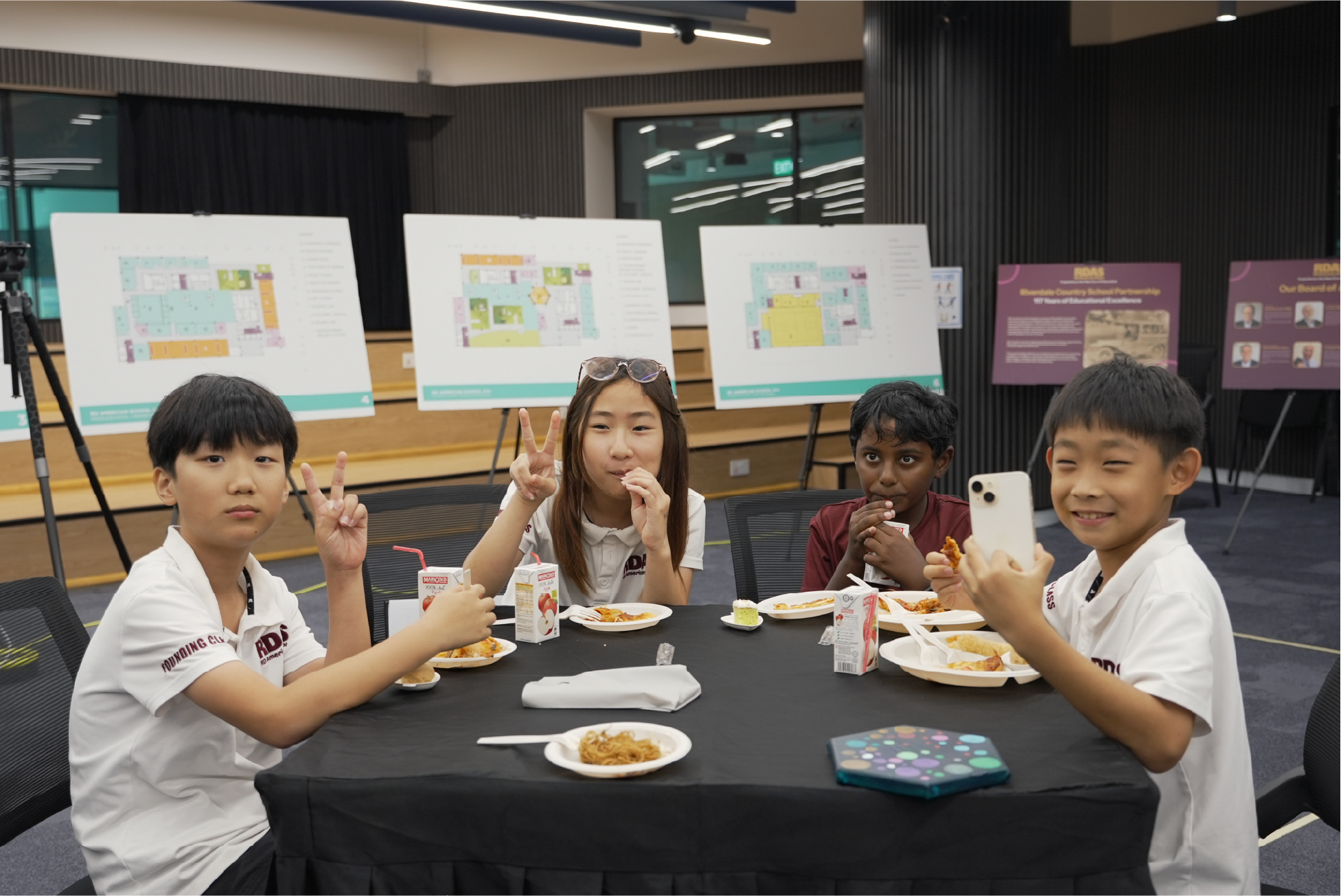
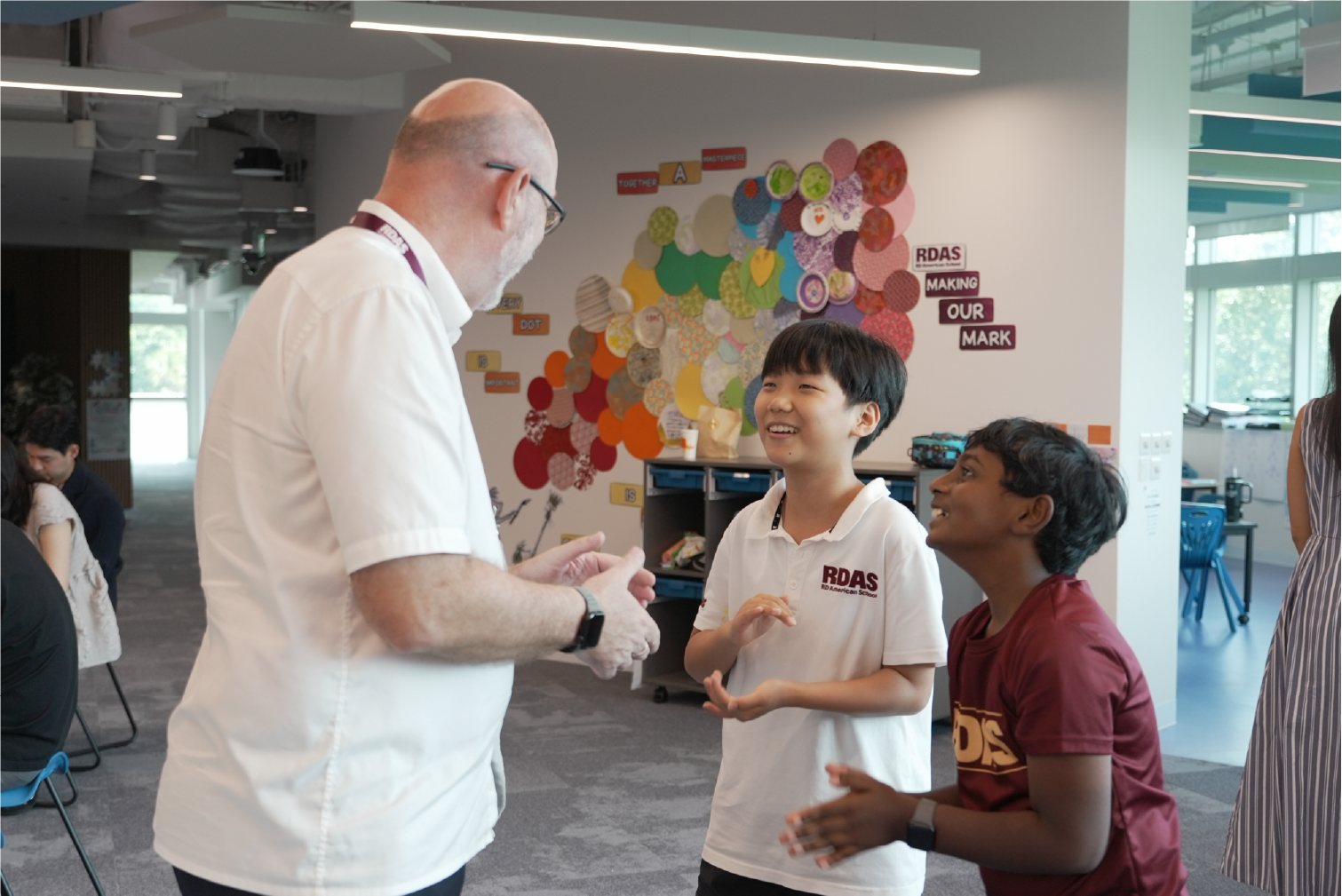
Every unit pursues three goals at once: what students know and can do in each subject, who they are becoming as people, and how they read the wider world.
The grade-appropriate knowledge, skills, and understanding in each discipline. We use American and international standards to set the scope and sequence of learning, and we teach toward a small set of core ideas that deepen year after year at RDAS.
Our students develop individual habits of heart and mind centered on the human qualities no technology can replace. Those habits keep a child resilient, kind, and adaptable in a fast-changing world.
Curiosity about the world, the habit of holding more than one perspective, and the willingness to take positive action on real issues, local and global, including those named in the UN Sustainable Development Goals.
Each advisor meets daily with a small group of students. Regular one-on-one check-ins give advisors the time to support goal-setting and self-reflection. Advisory is how we make sure every child is genuinely known by an adult who cares.
The day is bookended by structured, evidence-based practices that build the metacognitive habits that make learning stick.
Speech and debate are embedded across the English and Social Studies programs. Students are explicitly taught to speak with clarity, listen with purpose, and engage in civil, evidence-based argumentation: skills for learning, leadership, and life.
Students use AI critically and practically as a tool, while building the human strengths it cannot copy. As automation grows, judgment, empathy, and original reasoning are what will set them apart.
Students are given real chances to lead through Student Council, Student Ambassadors, and a club program that students design and lead themselves. Leadership is treated as a skill to be developed, not simply a role to be assigned.
Learning at RDAS extends beyond the school walls. Students engage with real issues, real audiences, and real communities, and they treat Singapore itself as a resource. Over time they come to believe that the world is worth exploring and that their work and ideas can have a genuine impact.
Each semester, with the support of their teachers, students choose a question that matters to them and build an answer to it: a campus food-waste audit, an interactive history of Bukit Timah, a working flood sensor. They draw on English, science, social studies, and design & tech to make something for a real audience. The weekly project periods turn that into a habit of ongoing, self-directed inquiry.
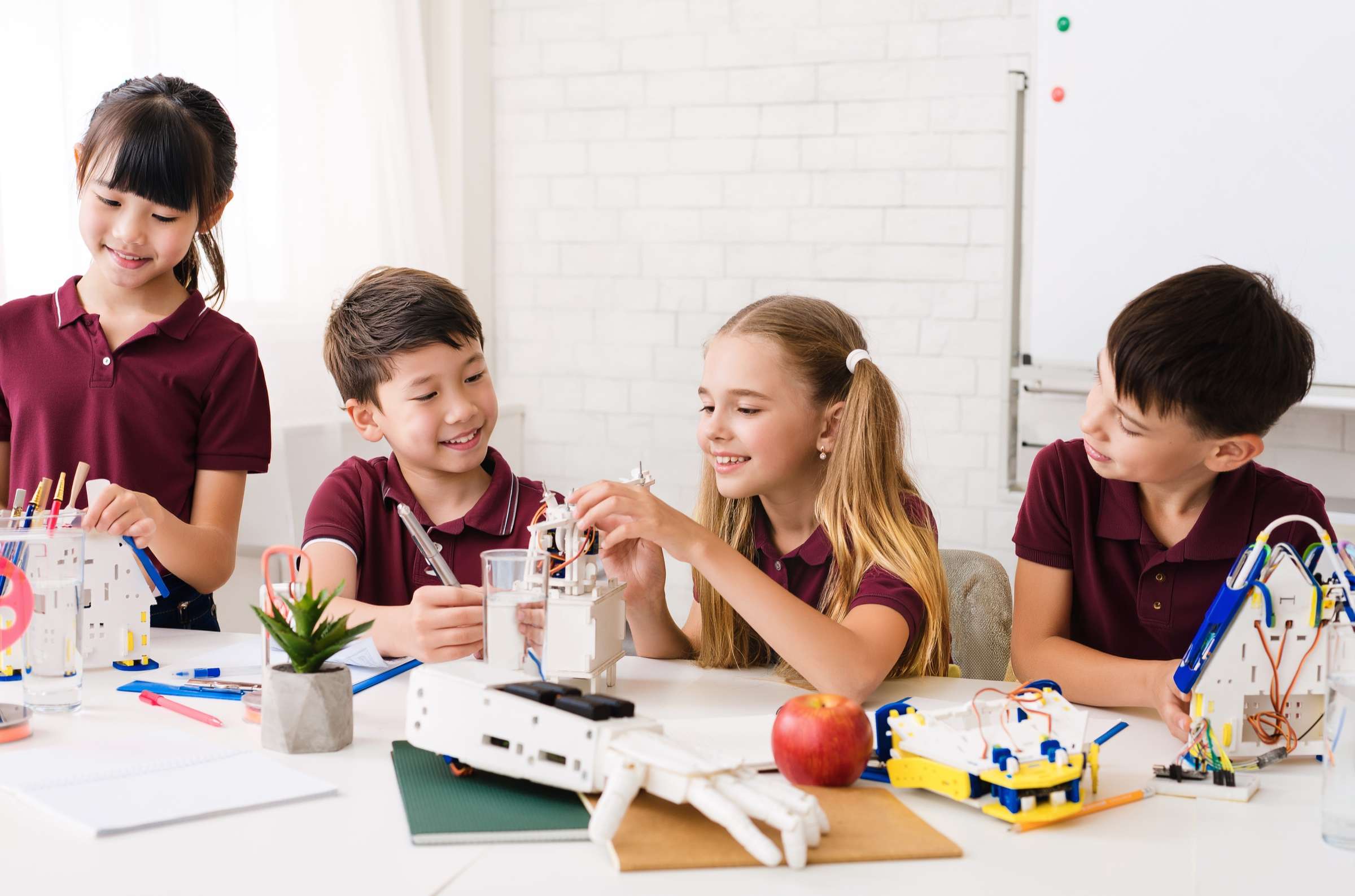
Facts and concepts. Checked often, kept simple, spaced over time, and kept low-stakes, because frequent recall is what makes knowledge stick.
Practiced over time and tracked against three stages, so a student can always see the next step: Beginning, Developing, Mastering.
Built slowly through connection and reflection. It surfaces in many different ways over time, in application, in practice, and in transfer to new problems.
Most schools are slow to put learning research into daily practice. We built the program around it from the start.
Without the right follow-up, students forget about 70% of new material within a day. We design against that, deliberately.
Pulling something back from memory does far more for learning than re-reading it. We use frequent, low-stakes recall as an everyday teaching tool.
Returning to an idea across weeks beats cramming it once. Key concepts spiral back through the year in new contexts.
Learning that takes some effort sticks better than learning that feels easy. Challenge set at the right level is a sign things are going right.
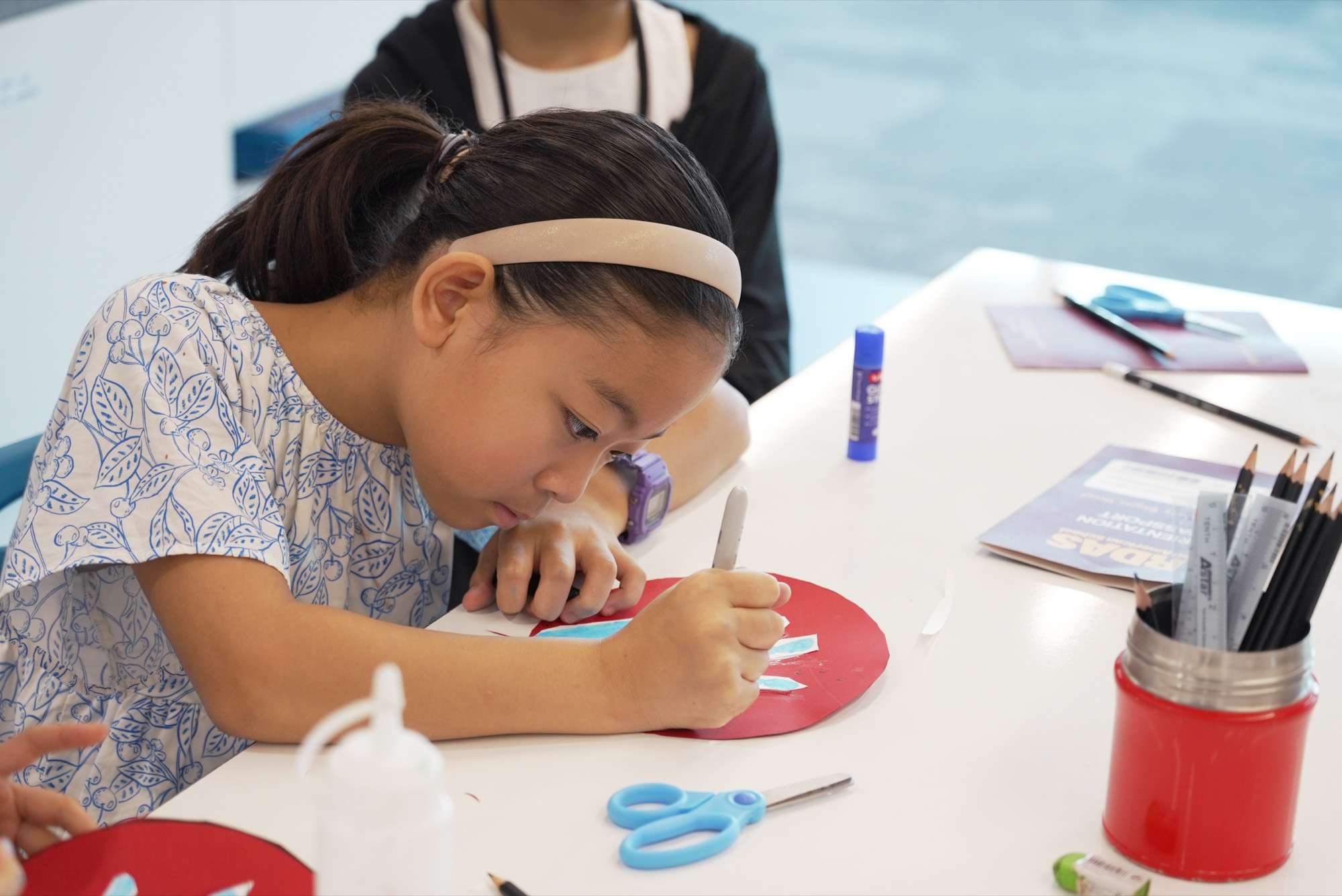
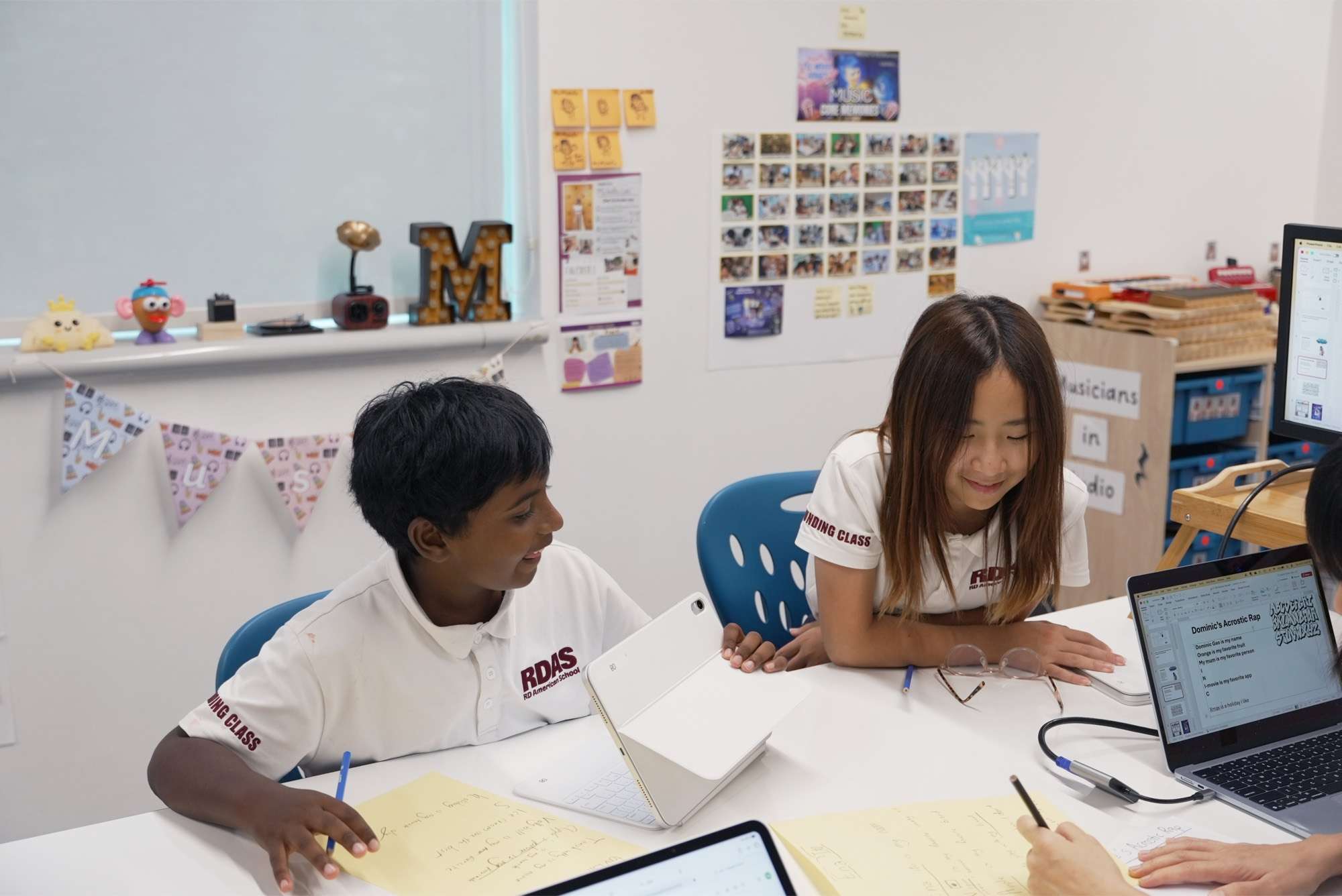
A unit runs about six weeks. The shape stays the same each time, so students stop wondering what comes next and put their energy into the learning itself.
Assessment and reflection never wait for a final exam. Teachers read each student's progress as it happens and adjust, while students plan, monitor, and evaluate their own learning.
At any point, a student can carry the learning beyond the classroom and do something with it, at home, at school, or in the wider community.
We hold students to a high academic standard, and we tell families clearly and honestly where their child stands. Assessment here does two jobs: it measures real progress, and it drives the next stage of learning.
A grade says where a student stands. Feedback says what to do about it. Teachers prioritize specific feedback that students can act on.
Skills are tracked against the same three stages all year, so progress stays visible to the student, not just to the teacher.
Wherever possible, students present their own learning to their families. Leading that conversation is what turns reflection into real ownership.
We hold these three in balance every day. Challenge is set at the right level for each learner, difficult enough to stretch them, never so difficult that it overwhelms them. With that balance, a young adolescent can take real risks, stumble safely, and grow.
Explore the middle school curriculum.