Elementary School Curriculum Overview

The elementary years, Grades 1 to 5, are where habits of heart and mind take root. Children learn to read and reason, ask their own questions, and discover their values and their strengths. It is also when they develop a love of learning. Because these years matter so much, we surround them with teachers who know them well and understand what is at stake this early.

Our Curriculum Framework

At our American international school in Singapore, the elementary program is built on international standards and on pedagogy informed by cognitive science.

Four Research-Based Approaches

Our teaching is grounded in the science of learning and current research. Four approaches shape every classroom.

Learning How to Learn

Children are taught to lead their own learning, building the skills, understanding, and mindset to become self-assessing, self-adjusting learners. They learn to think about their own thinking, a skill that pays off in every subject and across a lifetime.

Experiential Learning

Children develop and apply knowledge in real-world contexts through inquiry and project-based work, always paired with reflection. RDAS students come home asking questions, ready to tell you about their day, and eager to find out more.

Collaboration

Working effectively and respectfully in diverse groups is how children and adults alike solve problems, make decisions, and create together. It is a way of learning for students and a model of professional growth for our teachers.

Social-Emotional Learning

Children learn to monitor and regulate themselves socially, emotionally, and academically. These skills help them take intellectual risks, work with others, and lead their own learning.

The Shape of a Unit

Three Connected Learning Goals

Every unit at RDAS is designed around three connected sets of learning goals.

Subject Goals

The knowledge, skills, and deep understanding children need across every discipline, from Language Arts and Mathematics to Science, the Arts, and Technology. Your child builds mastery deep enough to carry into the next grade and the one after.

Personal Goals

Our students develop individual habits of heart and mind that build the human qualities no technology can replace. They keep your child resilient, kind, and adaptable in a fast-changing world.

International Goals

A growing awareness of other cultures and perspectives, and the confidence to act on local and global issues. Your child grows into an open, confident global citizen who feels at home anywhere in the world.

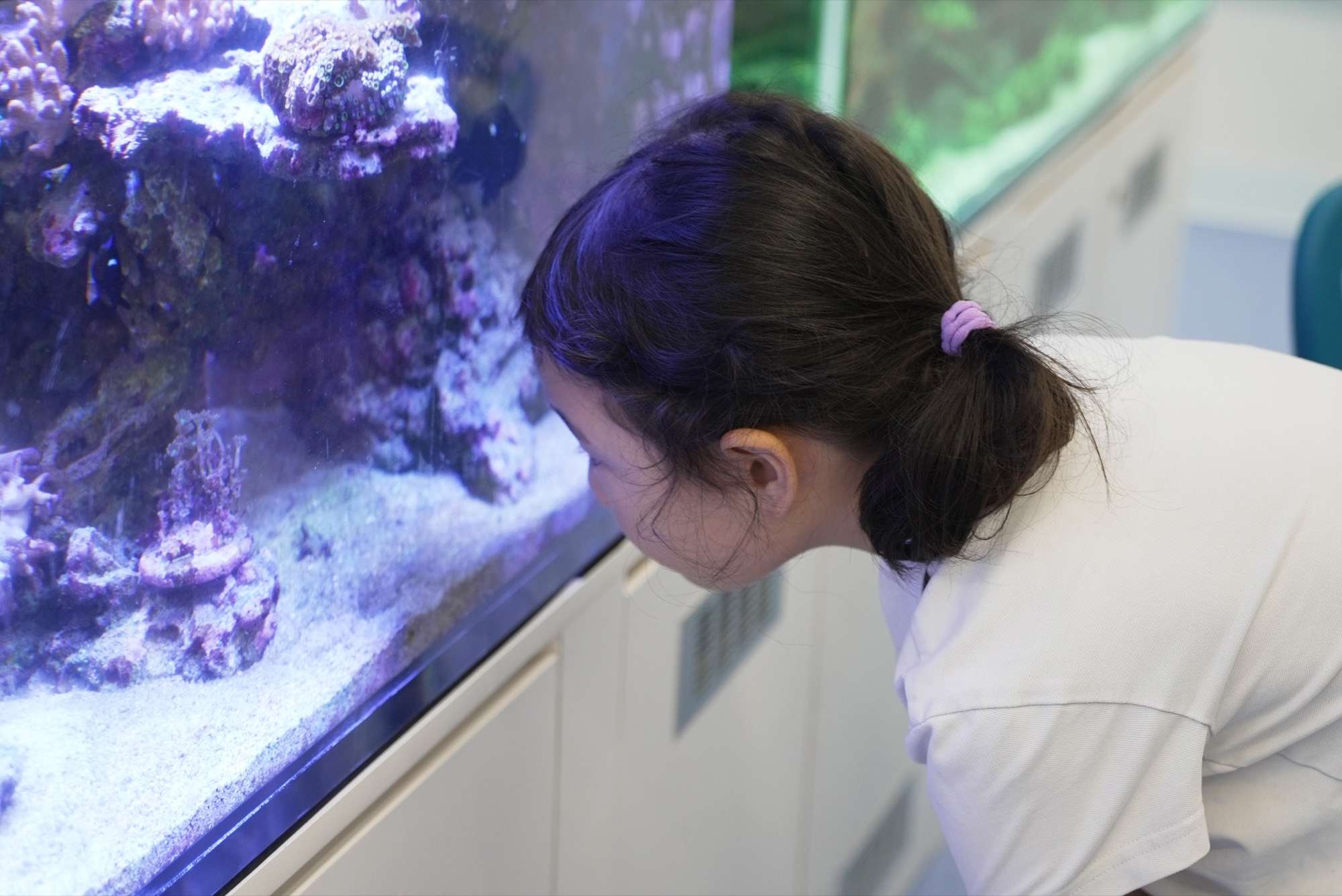
An RDAS Elementary student leaning in close to the reef aquarium, watching the coral and the fish.

We connect subjects through rich, real-world themes.
Science, art, history, and writing come together around one big question,
so learning sticks and your child sees how school connects to real life.

A Week at RDAS Elementary

A Day With Real Balance

Each day opens with Homebase & Wellness and closes with reflection. Between those bookends, core academics sit in even balance with Chinese, PE, the arts, Library, and Dream Lab.

A Sample Week in Elementary School Grades 1–5
Time Period Mon Tue Wed Thu Fri
8:00–8:20 Homebase & Wellness
8:20–9:05 Period 1 Learning Block Learning Block Learning Block Learning Block Learning Block
9:05–9:50 Period 2 Learning Block Learning Block Learning Block Learning Block Learning Block
9:50–10:10 Break
10:10–10:55 Period 3 Learning Block Learning Block Physical Education Assembly / Library Learning Block
10:55–11:40 Period 4 Learning Block Learning Block Chinese Art Physical Education
11:40–12:30 Lunch
12:30–1:15 Period 5 Physical Education Library Dream Lab PE / Swimming Chinese
1:15–2:00 Period 6 Chinese Physical Education Dream Lab PE / Swimming Music
2:00–2:15 Break
2:15–3:00 Period 7 Music Chinese Art Chinese Learning Block
3:00–3:15 Homebase & Wellness
3:20–4:20 After-school Co-Curricular Co-Curricular Co-Curricular Co-Curricular
Learning Block Chinese PE Arts Music Library Co-Curricular Dream Lab Homebase & Wellness

Sample schedule · subject to change each semester.