New Arrivals From Non-English Settings
Non-native speakers coming from schools where classes are taught in another language, who need English to keep up in an American curriculum.
Our English as an Additional Language (EAL) program gives students tiered language support, alongside opportunities to work with their peers in shared coursework. Language and friendships grow together from day one.
What is EAL
EAL stands for English as an Additional Language: support for students whose home language isn’t English, so they can keep up academically while their English catches up.
At many schools, EAL means being placed in a separate language class for a year, away from everyone else. Children learn the words, but miss out on school life. By the time their English is “good enough,” they find it hard to fit in with their classmates or catch up in other subjects.
RDAS does it differently. Students in EAL take classes designed to strengthen their foundational English skills. However, all students, EAL learners as well as native English speakers, come together for subjects such as PE, music, and art. They belong to the school community from day one.
Who it’s for
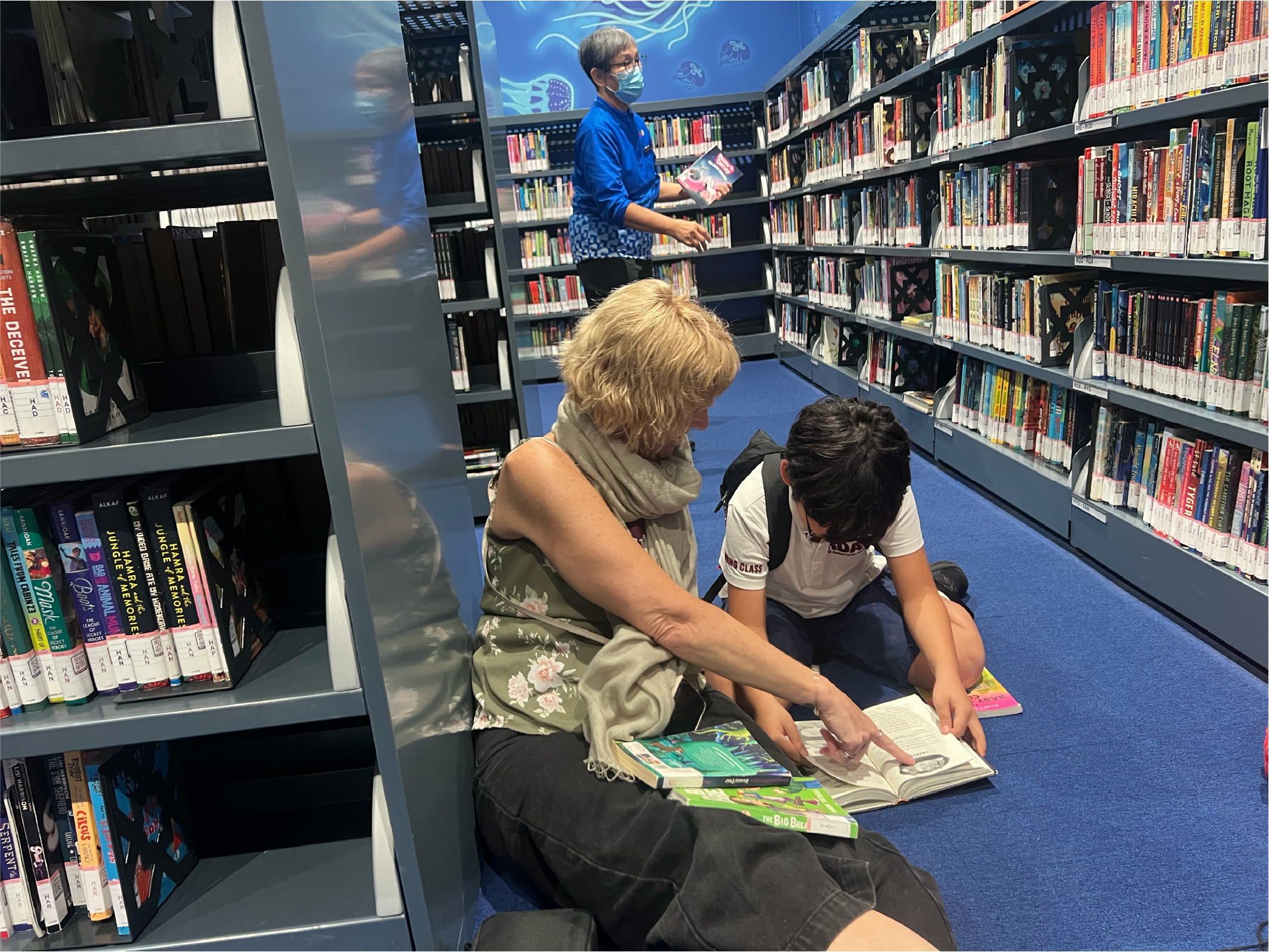
Open to students across our elementary and middle years (G1–G8). Our EAL program is built around what these children actually need.
Non-native speakers coming from schools where classes are taught in another language, who need English to keep up in an American curriculum.
Children with some English who aren’t yet ready to follow every academic lesson at full pace, and want to close that gap quickly.
Parents who want their child inside the school community from day one, making friends alongside everyone else.
Program structure
The EAL school day has two purposes. Intensive language classes build language skills, while mainstream classes put them to use in actual lessons, so children do not have to wait until their English is “good enough” to start feeling they belong.
Tier 1 · Building
Children at the earliest stage spend long hours in intensive English, while still joining some mainstream classes.
Tier 2 · Strengthening
As their English improves, EAL hours taper off and the child takes on more mainstream academic lessons.
Tier 3 · Mainstream
Once a child meets mainstream requirements, they move fully into the regular schedule.
The RDAS model
Most schools offer one of two routes for children who are still improving their English. Here’s how RDAS compares.


Teaching approach
English is used again and again, in class and in the time they spend with friends, until “learned” becomes “used.”
Children are exposed to English all day in lessons and activities, whether they are speaking up or taking it in.
Children aren’t isolated in a “language class” all day. They take part in the full life of the school, so they never feel left out.
Intensive language study and mainstream classes feed each other: words learned in the morning get put to use with friends the same afternoon.
In PE, music, and art, children can speak through movement, sound, and the things they make. Teachers spot each child’s strengths beyond language.
Working with native speakers in teams, choirs, and projects, children shift from “listening to the teacher” to “talking with friends.” That’s a completely different kind of motivation.
From day one, children connect in settings where perfect English isn’t required. No child is left waiting on the sidelines until their English is “good enough.”
Assessment & progression
From the entry assessment to the day a child moves fully into the mainstream, every step is measured, so support always matches where the child actually is, and grows with them.
Before starting, each child’s listening, speaking, reading, and writing are assessed to understand where they are.
Children are grouped by ability, so the pace fits each child.
Progress is checked on a set schedule: when a child meets mainstream requirements, they move up.
The language hours are gradually reduced; because students have always spent time in mainstream classes, there is no need to reintegrate.
Rolling Promotion
We assess EAL students regularly. When a child’s English meets mainstream requirements, they transfer into regular classes. Students do not need to wait for the next semester or school year.