

A Child's First Instrument
Is Themselves

At RDAS, children first experience music through their own voices and bodies. They feel rhythm through movement, explore sound by listening and experimenting, and express themselves through singing, improvisation and play. By first building a deep, physical connection to music, they come to understand it from the inside out. The instrument comes later, a tool to give voice to the musicality they have already found in themselves.

How we introduce music

Drawing Out The Musicality Every Child Already Has

We follow the path the science of learning points to: understanding grows out of experience. In singing, listening, movement, and improvisation, children meet music first as something alive and physical. Staff notation comes next, a language for what they already know and feel, and one they grow into naturally.

01

The Voice And The Body As A Child's First Instrument
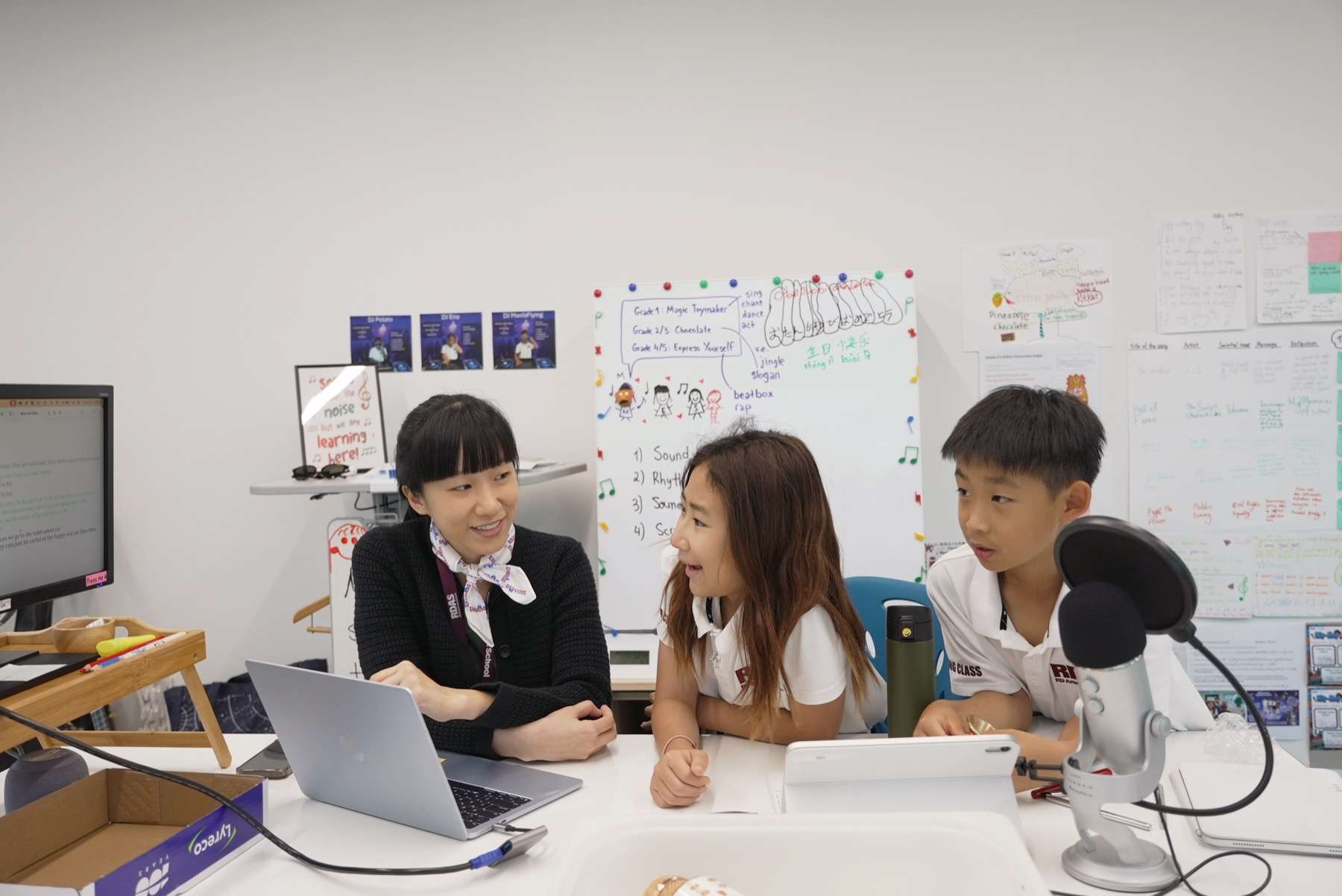
Children making music with voice and body — clapping, chanting and moving before any instrument

Young children make music first with their voices and bodies, developing an intuitive sense of how rhythm, pitch, and timbre are made.

Before they ever pick up an instrument, they chant, sing, move, and explore sound, learning to hold a steady pulse with confidence.

This approach draws on the Kodály, Orff, and Dalcroze traditions, which put voice and movement first so that inner hearing, rhythmic fluency, and coordination develop in the body.

Instrumental study grows from that foundation, and children carry a real sense of musical identity into everything they play.
02

Graphic Notation Before Staff Notation

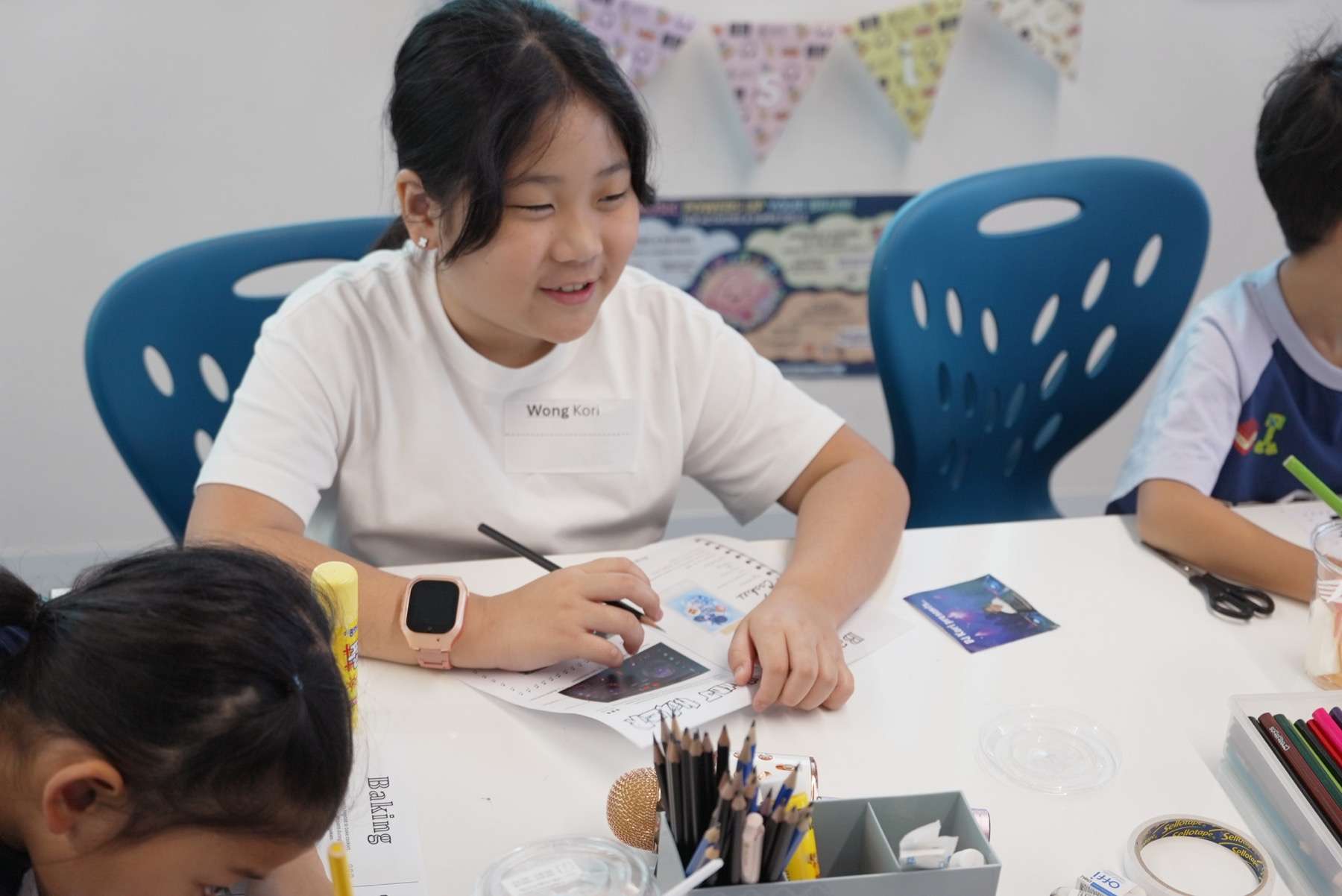
A child's graphic notation — shapes, lines and invented symbols standing in for sounds

Children represent their thinking in many "languages" before they read a note: graphic symbols, drawn shapes, movement, and sound.

Research on how children learn, and on embodied cognition, traces the same path: from concrete experience (hearing, singing, moving) to representation (drawing, graphic notation) to abstract symbol systems (staff notation).

Graphic notation is the bridge. A child might draw a book for the sound of pages turning, or a horn for a bike going by, then explain the sound world they made.

Staff notation comes later, one powerful way among many to record and share what they hear.

03

Active Opportunities
For Music Improvisation

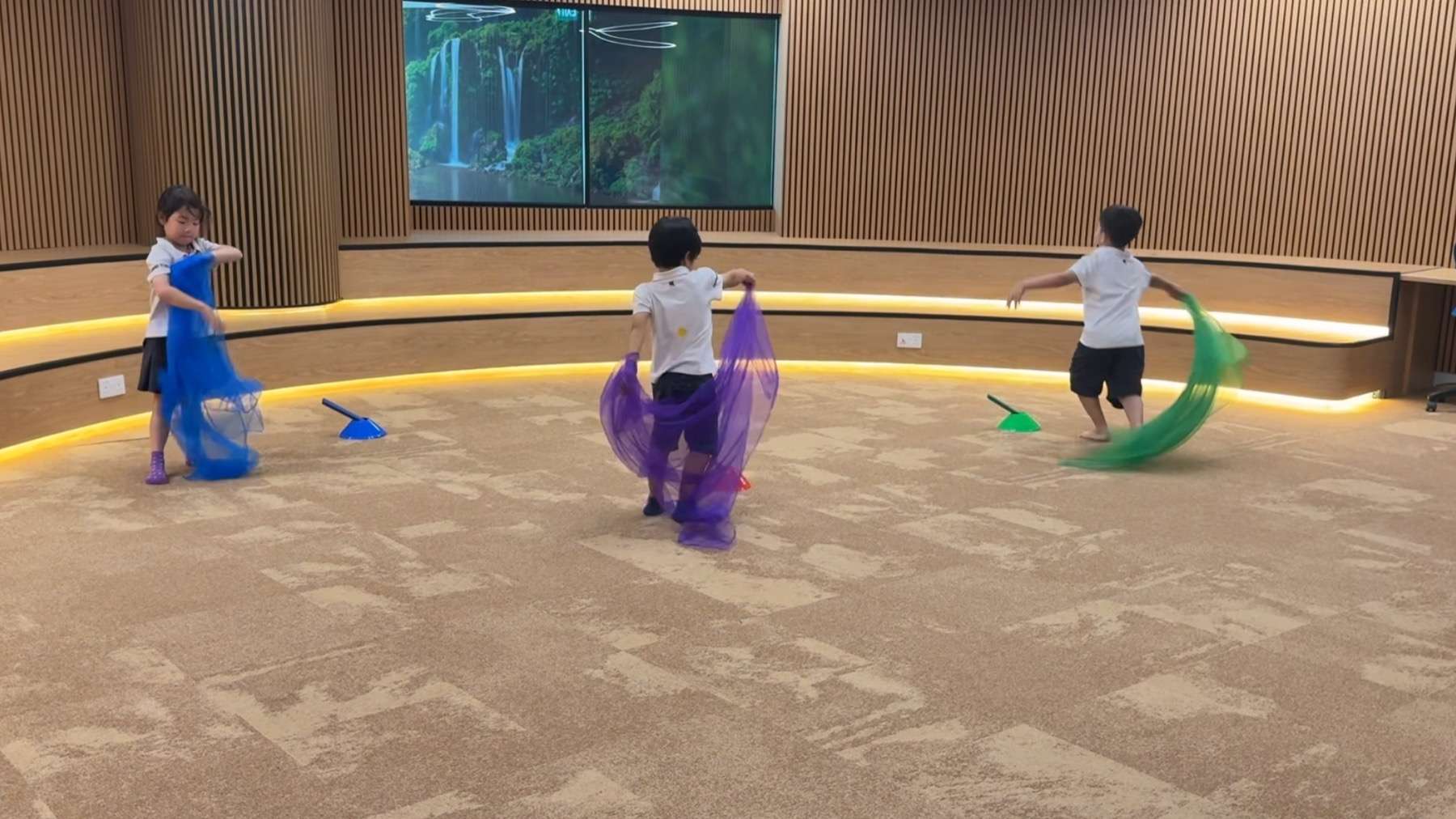
Children improvising freely — exploring and responding to sound without a fixed score

We invite improvisation before asking children to play a score exactly.

By experimenting with sound and pattern, they learn to listen, respond, and create, and they discover that music is a living, expressive language well before the pressure of "right notes."

Work like this goes deep. It calls on problem-solving, pattern recognition, and decision-making. It strengthens memory, and it stretches executive function as children adjust their ideas on the spot.

And because the choices are genuinely theirs, they want to keep going: an unexpected result turns into something worth chasing rather than a mistake, and the fear of performing loses much of its grip.

Explore

Three moments from music class, try them yourself

The three interactive activities below come from real lessons in our music classroom, adapted for you to try. Turn up the volume, play, and get a feel for how our children learn, create and experience music at RDAS.

The Body As An Instrument

"We begin not with instruments, but with the child's own body. Before playing percussion, children discover they can create rhythms through their voices, body and movement — building a personal, embodied understanding of how music works before carrying it to instruments." Ms. Michelle Lim

Click each part of the body to hear its sound.

← Tap here

Hit Record, then tap the body, and your first composition is done.

Draw Your Sound Ideas, And Make Them Heard

"Before the abstract symbols of staff notation, children represent sound through shapes, lines and invented symbols — making visible the music they hear, feel and create, a bridge between concrete experience and formal literacy." Ms. Michelle Lim

Tap the symbols to line them up, then press Read the score, and the sound follows your drawing.

Need some inspiration?

Empty staff. Tap a symbol above to add a sound and build your own graphic notation

Improvisation: Spontaneous Musical Expression

"Improvisation promotes active learning. Children construct understanding through experimentation rather than memorization, developing flexibility as they adapt moment by moment. Above all, it supports self-expression and agency — music as something personal, not fixed and rigid." Ms. Michelle Lim

Choose a "prop" and see how a movement can turn into sound. Move your cursor or finger inside the frame. The scale is set to a pentatonic (do re mi sol la), which narrows the pitch choices and creates a safe musical space where children can explore freely without worrying about clashing notes. That safety invites experimentation and builds their confidence in music-making.

Move around. Higher up means higher pitch, and the scarf lands on true notes

Curriculum map

The Musical Me, music as it is lived, at home and around the world

Music grows with a child, deepening their connection to themselves, their culture, and the world.

These are just a few examples of how music threads through our learning units. The full curriculum goes further.

Example

"Who Am I": The Body As An Instrument

Children discover that they can create and perform rhythms expressively using their voices, body percussion, and movement. This helps them internalize rhythm and experience different timbres in a direct, embodied way. They build rhythmic phrases that reflect who they are and what they care about, and share parts of themselves with others through chanting and singing.

Learning standards

Behind These Activities:
Our Music Learning Standards

Every activity above maps onto a child's steady growth in music. Tap each strand below to see the specific goals children reach, step by step, across our four stages of learning.

Stage 1
1.01 Be able to sing simple songs in unison and follow a melody
1.02 Be able to play individually and/or with others
1.03 Be able to respond to a musical stimulus
1.04 Be able to reproduce/imitate sounds and rhythmic patterns
1.05 Understand that musical elements can be used to create different effects
Stage 2
2.01 Be able to sing more complex songs accurately and expressively
2.02 Be able to maintain their own part in an ensemble performance
2.03 Be able to respond appropriately to a musical stimulus
2.04 Be able to perform/reproduce from symbolic or staff notation
2.05 Understand that musical elements can be combined and adjusted to create varied effects
Stage 3
3.01 Be able to sing songs expressively with an awareness of an audience
3.02 Be able to fulfill their role when performing with others and follow the cues of a conductor
3.03 Be able to perform/reproduce phrases accurately from staff notation and form their own interpretation
3.04 Understand that musical elements can be combined and adjusted to create specific effects
Stage 4
4.01 Be able to sing using a range of techniques and performance directions to convey style and emotion
4.02 Be able to take on different roles in a variety of ensembles
4.03 Be able to perform/reproduce a score accurately using a range of techniques and form a personal interpretation
4.04 Understand that musical elements can be combined and adjusted to build musical form
Stage 1
1.06 Be able to improvise using the voice and/or untuned percussion in response to a stimulus
1.07 Be able to select appropriate sounds and instruments when creating music, and explain their choices
Stage 2
2.06 Be able to compose and adapt ostinati/rhythmic patterns on an instrument within a given framework
2.07 Be able to adjust musical elements to convey a given idea
Stage 3
3.05 Be able to create melodic phrases using a given scale
3.06 Be able to adjust musical elements when creating a longer piece
Stage 4
4.05 Be able to compose using original ideas, motifs and a range of techniques
4.06 Be able to arrange music to create a new interpretation/composition
Stage 1
1.08 Know that music can be represented by symbols
1.09 Be able to use symbols to represent sounds, including within their own compositions
1.10 Be able to identify musical elements
1.11 Know the different ways in which a range of instruments produce sound
Stage 2
2.08 Know that notation can indicate how a sound should be played
2.09 Be able to read and interpret the basic principles of staff notation
2.10 Be able to identify a broad range of musical elements
2.11 Know the names of instrument families and some of their characteristics
Stage 3
3.07 Know the names of different note values in standard notation
3.08 Be able to apply the principles of staff notation
3.09 Be able to discuss musical elements and the effects they create
3.10 Know the classification of instrument families and the instruments belonging to each
Stage 4
4.07 Know the relationship between notes and other symbols in standard notation
4.08 Be able to use standard musical notation and create their own forms of notation
4.09 Be able to use a score to support the analysis of music
4.10 Know the auxiliary instruments within each instrument family
Stage 1
1.12 Understand how sounds and instruments convey emotion and mood
1.13 Be able to comment on their own musical experiences and give supporting reasons
1.14 Understand that music means different things to different people
Stage 2
2.12 Understand how music can drive other forms of performance, such as dance
2.13 Understand that music may share common elements because of where and when it was created
2.14 Be able to evaluate the effectiveness of compositions and performances
2.15 Understand that music is used for a range of purposes
Stage 3
3.11 Understand why particular sounds and instruments are chosen to convey compositional intent
3.12 Understand that certain features and conventions are most associated with particular styles and genres
3.13 Be able to critically assess the effectiveness of a performance
3.14 Understand that music can be linked to cultural identity
Stage 4
4.11 Understand that music of a particular historical period may display certain features that can influence, contribute to, or be used within later works
4.12 Understand the influence of historical, cultural, technological, political, social and economic factors on the creation of music
4.13 Be able to establish criteria and use technical vocabulary to evaluate performances
4.14 Understand the role that music plays in social and cultural phenomena
A glimpse into class

An Ordinary Day In Music Class

In class · Voiceover

Trying To Give Pictures A Voice

In this classroom moment, children try out voiceover with their own voices, testing, adjusting and discovering as they go.

Learning music means staying curious as you experiment with sound, expressing who you are, and connecting with others in a deeply human way. Your child does the same in every other classroom at RDAS.