

Every sport is a journey,
taken one step at a time

At RD American School, physical education is a daily class for every child. It is central to our program because we believe movement shapes far more than the body. In PE, children progress systematically in each skill and sport, from first discovery through foundation and refinement to mastery.

270 Minutes / Week

Your child moves every single day

At least forty-five minutes every day from Monday to Friday, extended to 90 minutes on Thursday, for a weekly total of 270 minutes. This total reflects a core belief:

Movement should be woven into the rhythm of every day.

Regular, sufficient, daily activity benefits children far more than occasional, concentrated training.

Mon 45'
Tue 45'
Wed 45'
Thu 90'
Fri 45'

Why Sufficient Movement Matters

Movement does more than build the body.
It helps children learn better and live better

Why do we give time to movement every single day? Because a growing body of evidence shows that sufficient, regular activity is a catalyst for a child's mind and mood.

For learning & the brain

After moving, children often engage with the classroom more attentively. Research links regular physical activity with stronger cognitive function and academic performance.

Better attention and focus

Stronger working memory and self-regulation

Greater focus on classroom tasks soon after activity

A positive long-term link with academic results

For emotion & well-being

Physical activity is a recognized regulator of mood, helping children stay balanced under pressure.

Eases anxiety and relieves stress

Improves sleep quality

Builds confidence and social skills through team play

Helps regulate emotion and maintain balance

For physical growth

For children in their growing years, regular movement shapes their physical foundation and lifelong habits of health.

Strengthens cardiovascular and muscular fitness

Supports bone health and development

Maintains healthy weight and metabolism

Builds habits that last a lifetime

These points draw on public guidance from the WHO and the CDC on physical activity for children and adolescents, together with systematic reviews on the relationship between physical activity and cognition, executive function, and academic performance. Movement is one important contributor to a child's holistic development.

The Big Picture

Different ages, different bodies in the making

One principle runs throughout. The younger the child, the greater the emphasis on whole-body coordination and quality of movement; strength and load are introduced only gradually with age.

Lower Elementary
Grades 1–2 · Ages 6–8

Whole-body coordination of major muscle groups

Emerging core stability

Lower-body spring and balance

A prime window for rapid neurological development. The aim at this age is to lay down fundamental movement patterns, through hours of play: running, jumping, climbing, rolling, and throwing games, with a first playful introduction to swimming and ball sports. Building muscle comes later.

Middle Elementary
Grades 3–4 · Ages 8–10

Core (abdominals, spinal erectors)

Legs and lower body

Shoulders and back (climbing, hanging)

Coordination and agility continue to grow. More structured movement can be introduced, though still without added load. This is a good stage to begin teaching the basic skills of basketball, soccer, badminton, and similar sports in a deliberate order.

Upper Elementary
Grades 5–6 · Ages 10–12

Continued core stability

Lower body (quads, glutes, calves)

Upper-body push and pull

Coordination is close to maturity, and this is a sensitive window for speed and agility. Children can now handle fuller bodyweight work and sport-specific practice, still without heavy loads.

Middle School
Grades 6–8 · Ages 11–14

Core (rectus, obliques, erectors)

Lower body (quads, glutes, hamstrings)

Upper body & back (chest, lats, shoulders, arms)

As puberty arrives, real muscle growth becomes possible. Light loads may be introduced gradually, but correct form remains central. Each sport can move into a more specialized, higher-intensity stage, and during growth spurts we pay close attention to protection and stretching.

High School
Grades 9–12 · Ages 14–18

Systematic whole-body development

Maximal strength and muscle (with guidance)

Targeted core and weak-point work

The body nears maturity, muscle and strength grow faster, and more systematic strength training becomes possible under professional guidance. The emphasis shifts toward the individual: a student can go deep into the sport they love and keep it as a skill and a habit for life.

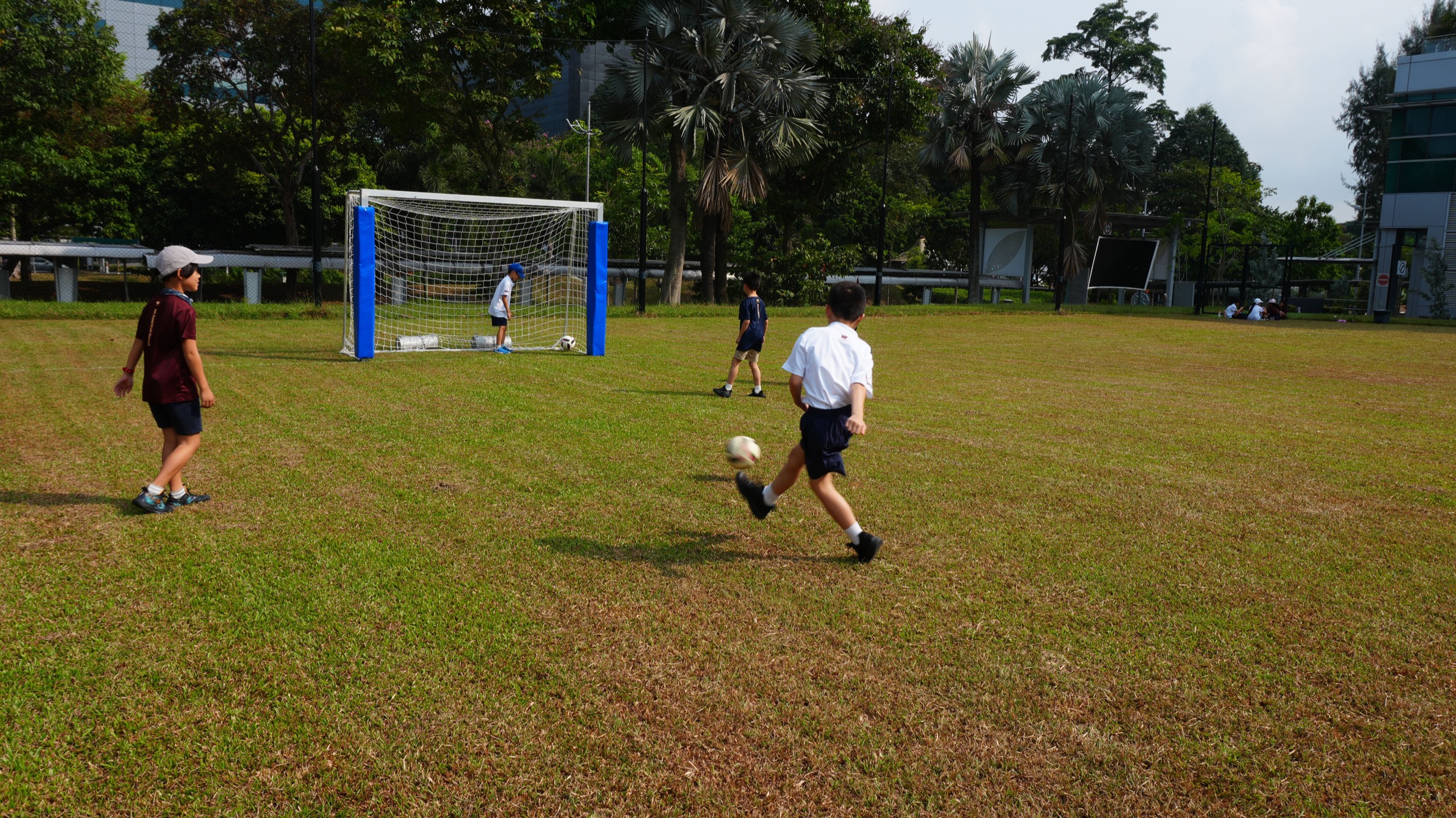
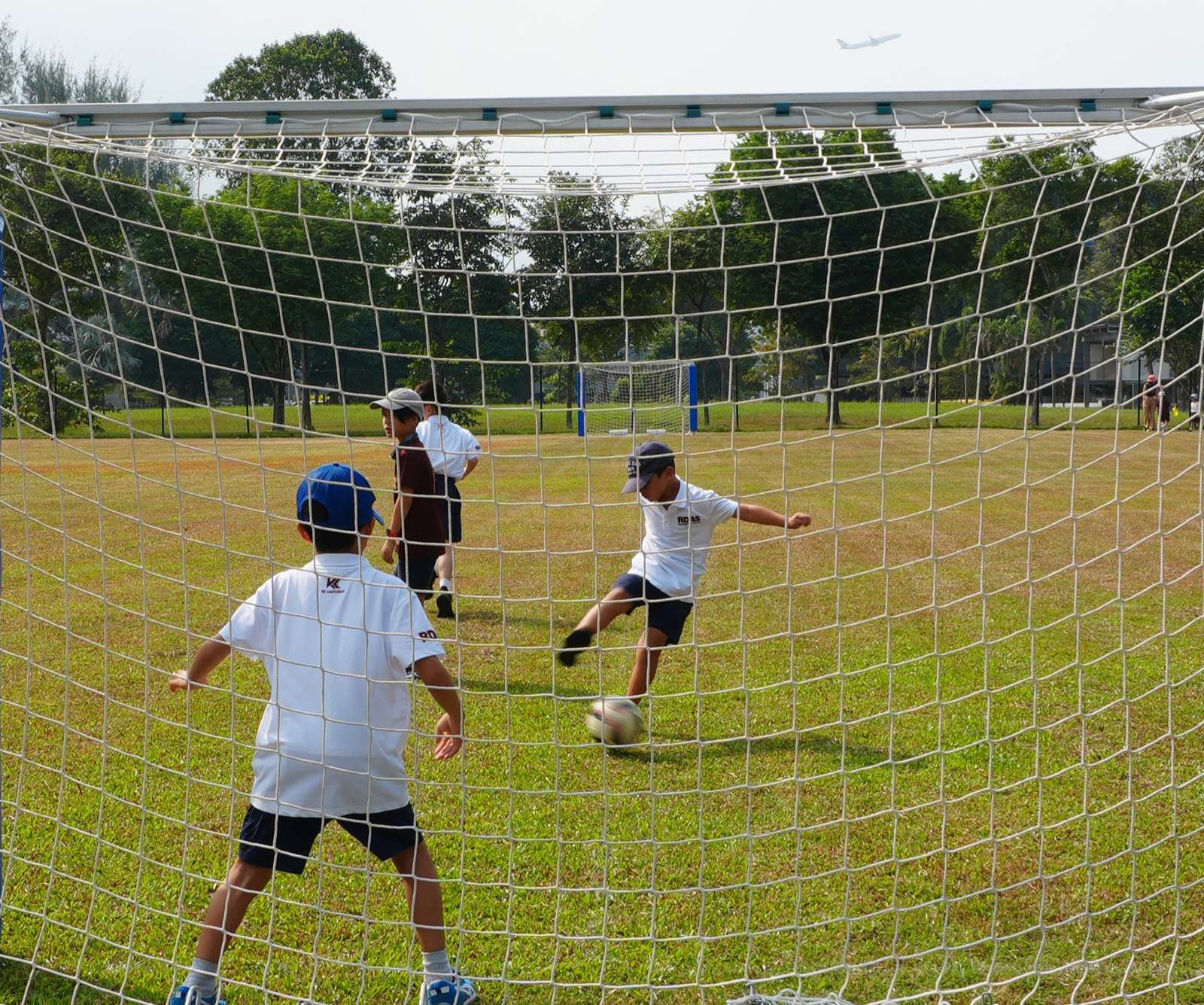
Children playing football on the grass field, one kicking the ball towards a goal, with trees and campus buildings behind

Photo — children across the age stages, on the field

Principles Across Every Grade

Understand these, and you
understand our whole approach

Whatever the grade, the sport, or the step, the following always hold true. They are the thinking our program is built on.

01

The core comes first

The abdominal and back muscles need work at every stage, because they steady every other movement. In swimming, ball sports, or running, a stable core is what generates power and what keeps a child from getting hurt.

02

Quality before load

Correct, safe movement always comes before how much weight is lifted, especially in the early years. We would rather a child perform a movement well than rush to add difficulty or load. In the language of cognitive science, encoding a movement correctly from the start is far easier than unlearning a bad habit later.

03

Protect the spine and joints

Before the skeleton has fully matured, especially during growth spurts, we avoid heavy loads on the spine and joints. This is why, in the younger years, we rely on play and bodyweight movement.

04

Warm up and stretch

Thorough warm-up and stretching support flexibility and reduce injury risk. The habit itself is part of physical literacy, and it serves a child for life.

05

Guided by maturity

Every child develops at a different pace, so we go by a child’s physical maturity. The grades here are a general guide; our attention is always on the individual child.

06

Balanced development

We avoid training any single area in isolation; upper and lower body, front and back, develop together. That is exactly why our sports are varied and complementary. Balance matters more than the number of sports.

07

Regular beats occasional

Consistency is what a growing body responds to. We weave physical education into each day for precisely this reason: body and brain both prefer a steady rhythm.

08

Joy sustains the journey

A child sticks with a sport only if they enjoy it. Every journey begins with "Discovery" precisely because interest always comes first.

Mastering how to breathe and how to generate power in each sport, along with good warm-up and stretching habits, stays with a person for life.

Swimming and soccer build cardiovascular endurance; basketball, squash, and baseball train power and reaction; badminton and tennis sharpen agility and coordination; and the foundational running, jumping, climbing, rolling, and throwing lay the groundwork of movement for all of them. Variety of this kind, where the sports complement each other, is what keeps a child’s development balanced.

Cardiovascular endurance Power Reaction speed Agility & coordination Core stability Teamwork Fundamental movement

Our structure

Four steps
for every sport

Every sport is laid out as a step-by-step path. That design is deliberate; it follows what cognitive science tells us about how a person learns a skill: build interest and a sense of safety first, then deepen the challenge gradually. The four steps below apply across all sports, but different sports begin at different ages. Running and swimming can start early, while sports demanding greater coordination and strength, such as baseball, tennis, and squash, begin later. That is why the grade ranges differ from sport to sport.

The high school years are covered on their own, after all the sports.
1
DISCOVER

Become familiar, unafraid, playful. The goal is enjoyment and a feel for the sport.

2
FOUNDATION

Learn the core skills and perform the full basic movements with proper form.

3
REFINE

Refine technique and raise intensity, handling more complex situations.

4
MASTER

Train systematically, combining fitness and skill, ready for competition.

Our Sports

Eight sports, eight journeys

From the water to the court, from solitary running to team play, each sport builds something different. Here is how each progresses from discovery to mastery.

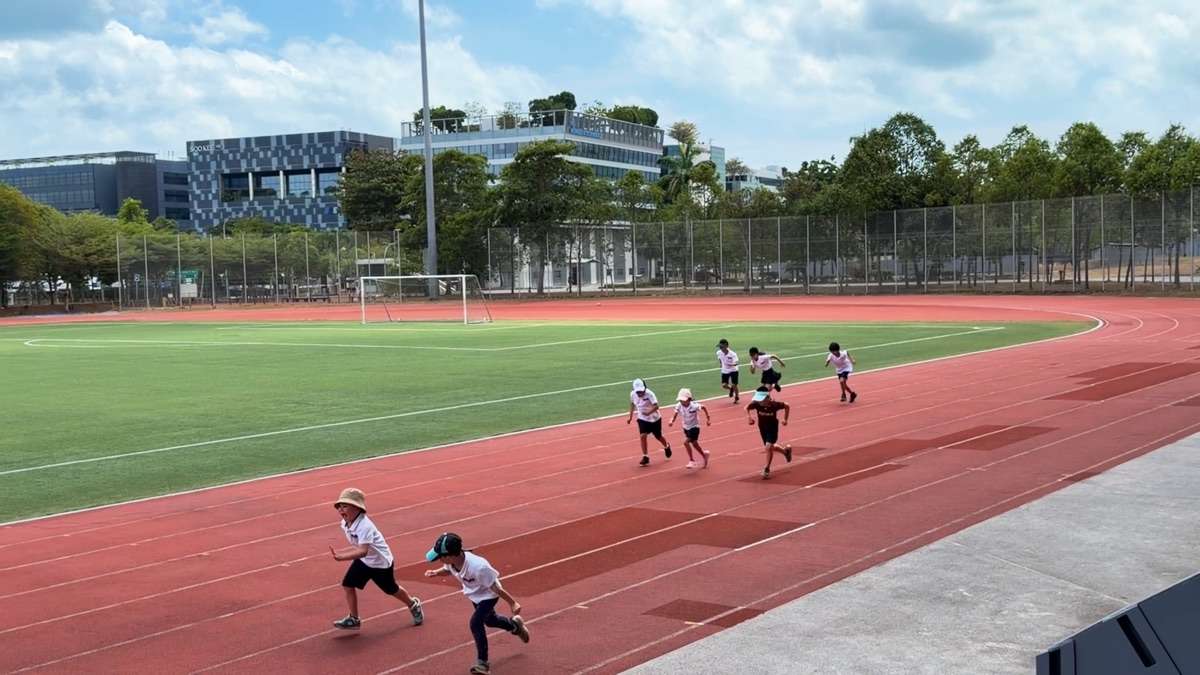
Students running on the track during PE

Photo — Running on the track

Running

Running is the foundation beneath almost every sport, the most democratic of activities, and a lifelong companion. The path runs from running for the joy of it, to running well, to running farther, to running fast.

Discover Gr 1–2
Run for joy

Run naturally through chasing games, enjoying movement without worrying about speed or form.

Foundation Gr 3–4
Run correctly

Learn proper form and breathing rhythm, understand warm-up and cool-down, and build a steady jogging habit.

Refine Gr 5–6
Run far

Build aerobic endurance for longer steady runs; explore interval and tempo work.

Master Gr 6–8
Run fast, run smart

Systematic endurance and speed training, with pacing strategy, for distance or sprint events.

Develops: Legs & glutes Calves Core Cardio endurance
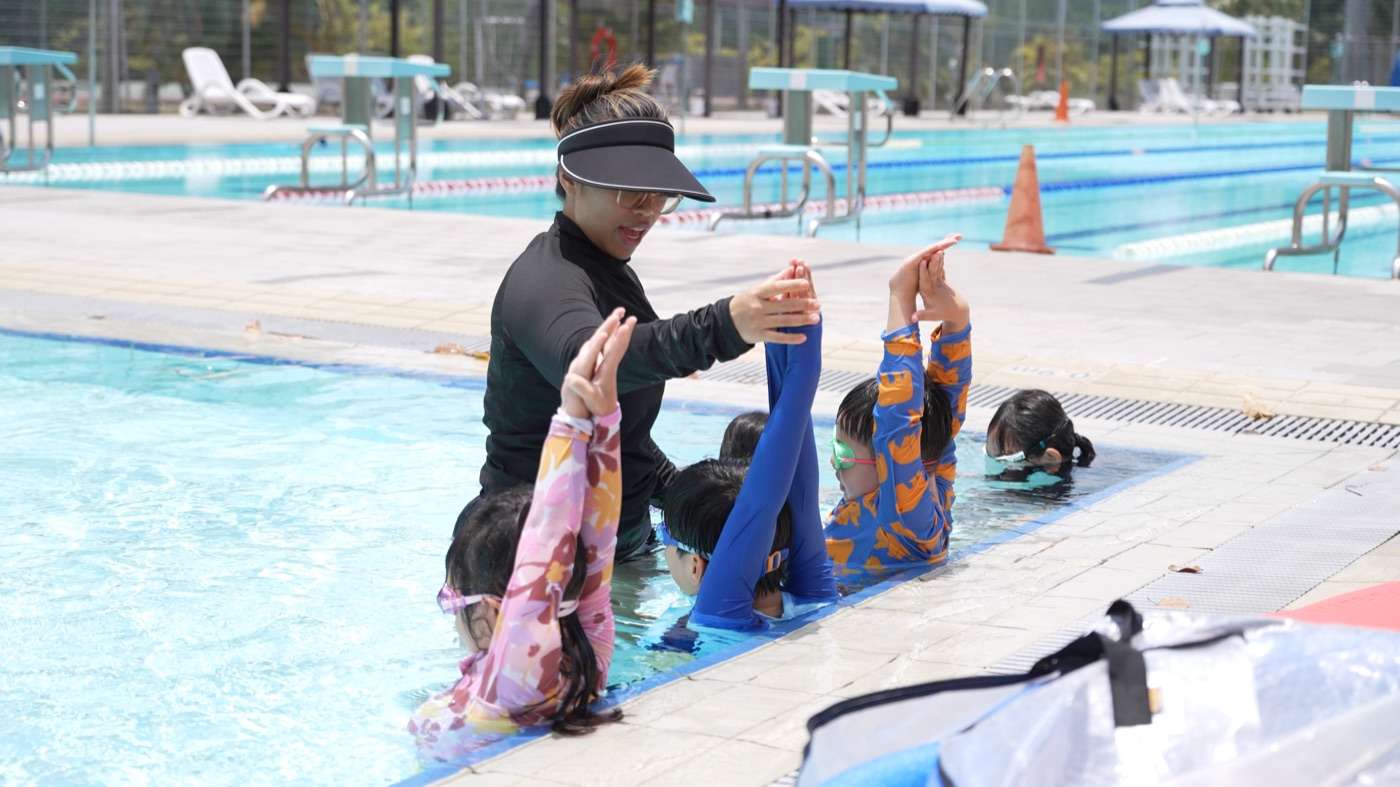
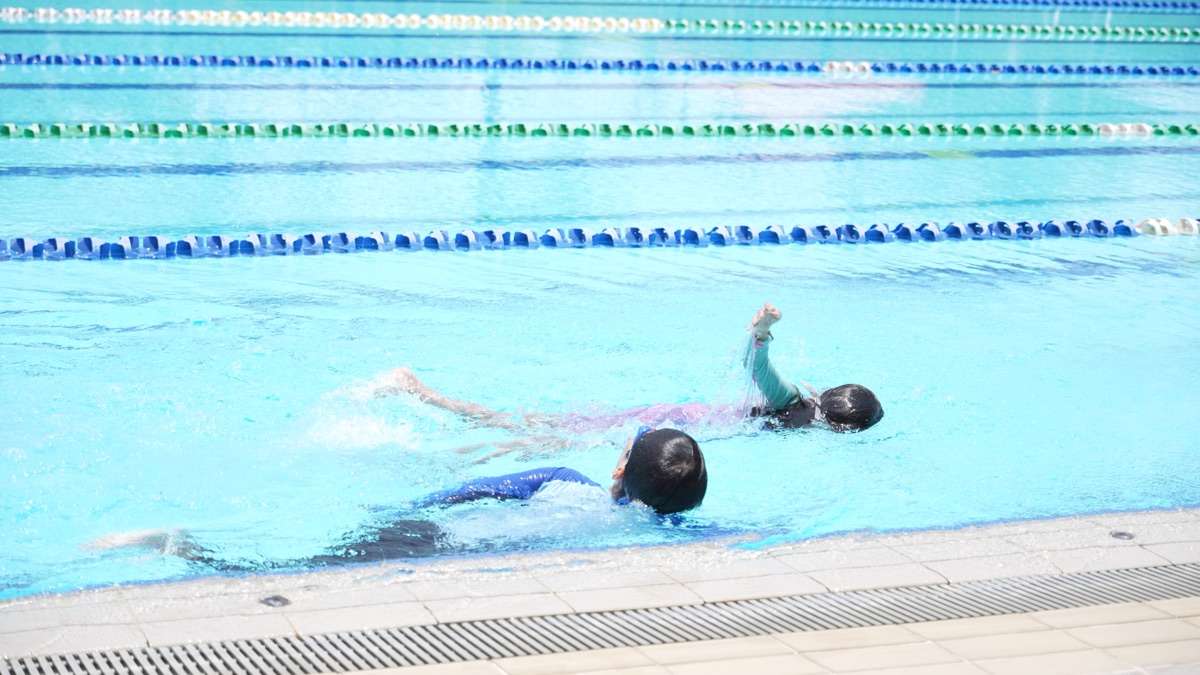
Students swimming in the pool during PE

Photo — Swimming in the pool

Swimming

A full-body, low-impact aerobic activity. Water resistance works nearly every muscle group, which builds cardiovascular fitness and improves posture. Swimming is also a survival skill.

Discover Gr 1–2
Comfort in water

Get over any fear of the water; learn to float, hold a breath, and breathe while staying relaxed.

Foundation Gr 3–4
First strokes

Learn freestyle and breaststroke, swimming short distances with coordinated form.

Refine Gr 5–6
More strokes, more distance

Master several strokes, improve efficiency and turns, swim longer with a sense of pace.

Master Gr 6–8
Endurance, speed, racing

With fitness in place, train endurance and speed systematically, refine technique, and race.

Develops: Lats & shoulders Core Legs Chest & arms Cardio
Students playing soccer on the field

Photo — Soccer on the field

Soccer

A sustained aerobic sport combining sprints, changes of direction, and shooting. It develops lower-body strength and endurance, and is an ideal vehicle for teamwork and tactical awareness.

Discover Gr 1–2
Love the ball

Get a feel for the ball through dribbling and target games, running freely in small spaces.

Foundation Gr 3–4
Core skills

Learn passing, trapping, dribbling, and basic shooting; understand rules and positions.

Refine Gr 5–6
Play together

More consistent skills, movement off the ball, and small-sided matches.

Master Gr 6–8
Tactics & full matches

Greater fitness and physicality, understanding of formations, and full-field competition.

Develops: Legs & glutes Calves Core Cardio & teamwork
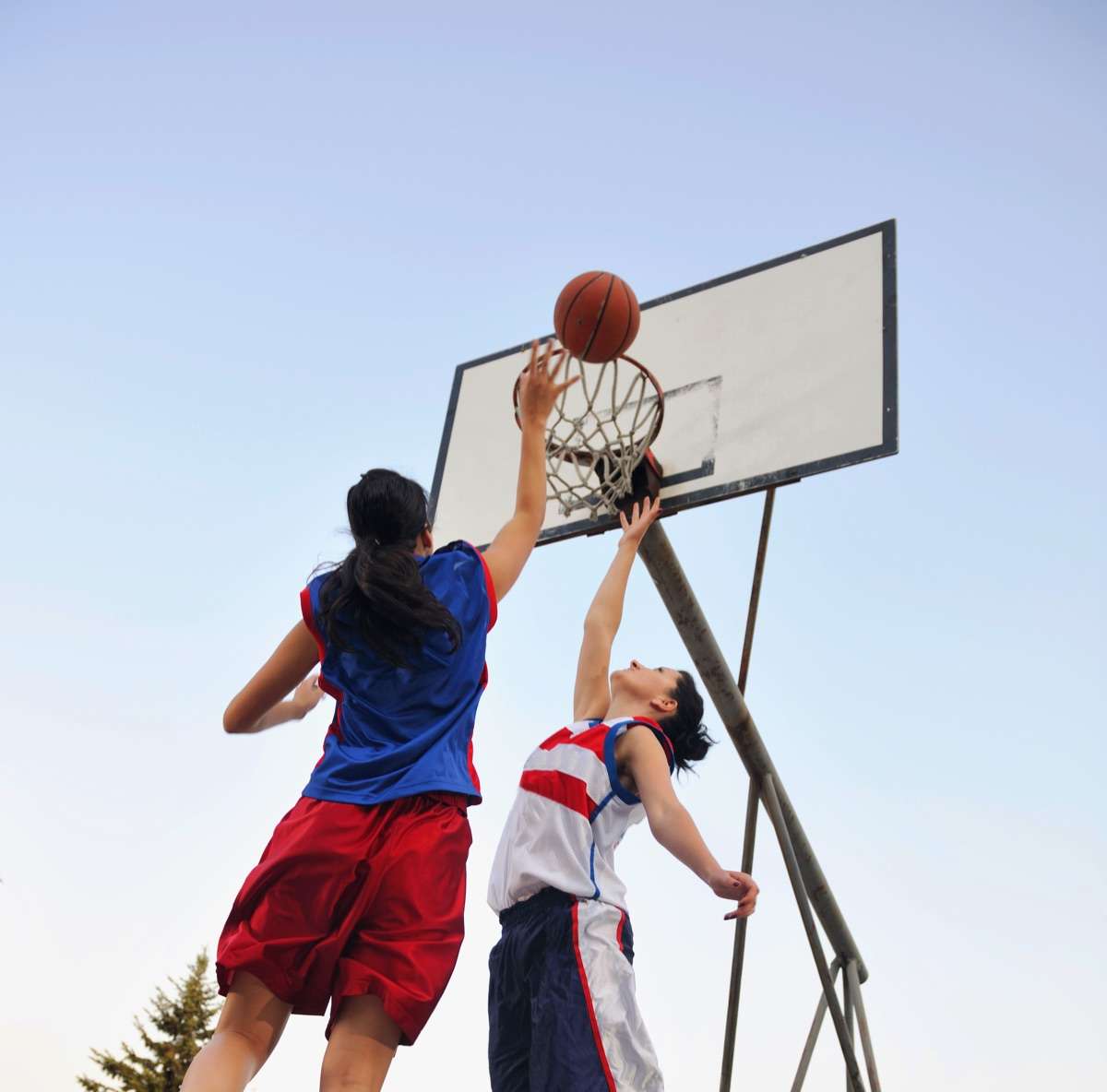
Students playing basketball on the court

Photo — Basketball on the court

Basketball

A high-intensity interval sport. Frequent stops, jumps, and direction changes build lower-body power, spatial awareness, and teamwork.

Discover Gr 2–3
Get a feel

Dribble in place and on the move, with two-handed shooting games to build feel.

Foundation Gr 4
Core skills

Sound dribbling, passing, and shooting form; understand the basic rules.

Refine Gr 5–6
Layups & half-court

Learn layups and changes of direction, pick up offense and defense, and play half-court.

Master Gr 6–8
Tactics & full-court

Greater power and physicality, tactical play, and full-court competition.

Develops: Lower-body power Core Shoulders & arms Hand-eye
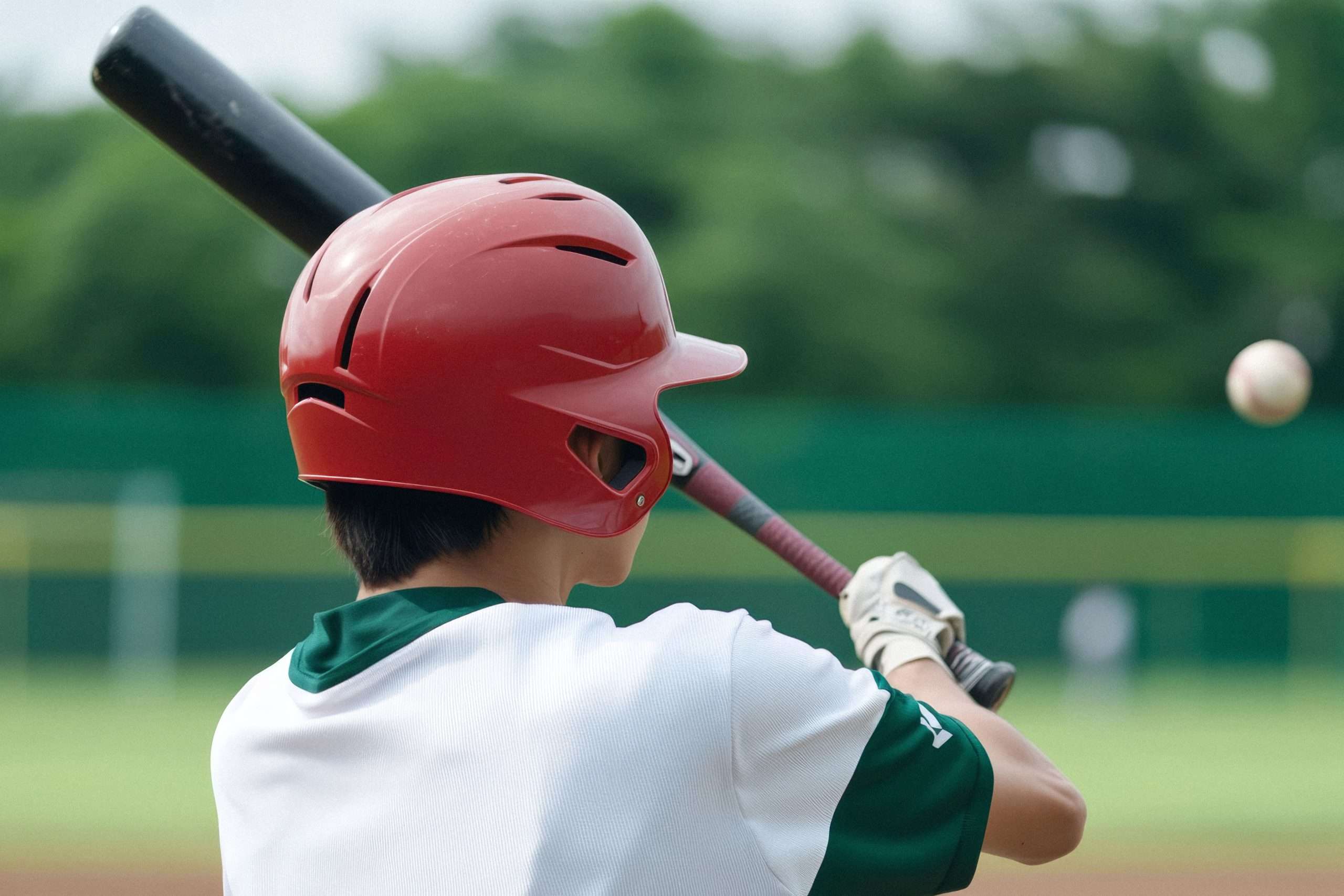
Students playing baseball during PE

Photo — Baseball on the diamond

Baseball

An explosive combination of throwing, hitting, and running that develops rotational power, hand-eye coordination, and split-second reaction. Because it is technically demanding, it begins a little later.

Discover Gr 3–4
Catch, throw, swing

Practice catching, throwing, and swinging with soft balls, building hand-eye coordination and a sense of safety.

Foundation Gr 5
Core skills

Learn pitching, batting, and base-running basics; understand the rules.

Refine Gr 6–7
Positions & play

Improve pitching and hitting consistency; understand fielding positions and play.

Master Gr 7–8
Tactics & games

Strengthen rotational power and tactical awareness, and play competitive games.

Develops: Rotational core Shoulders & arms Lower body Hand-eye
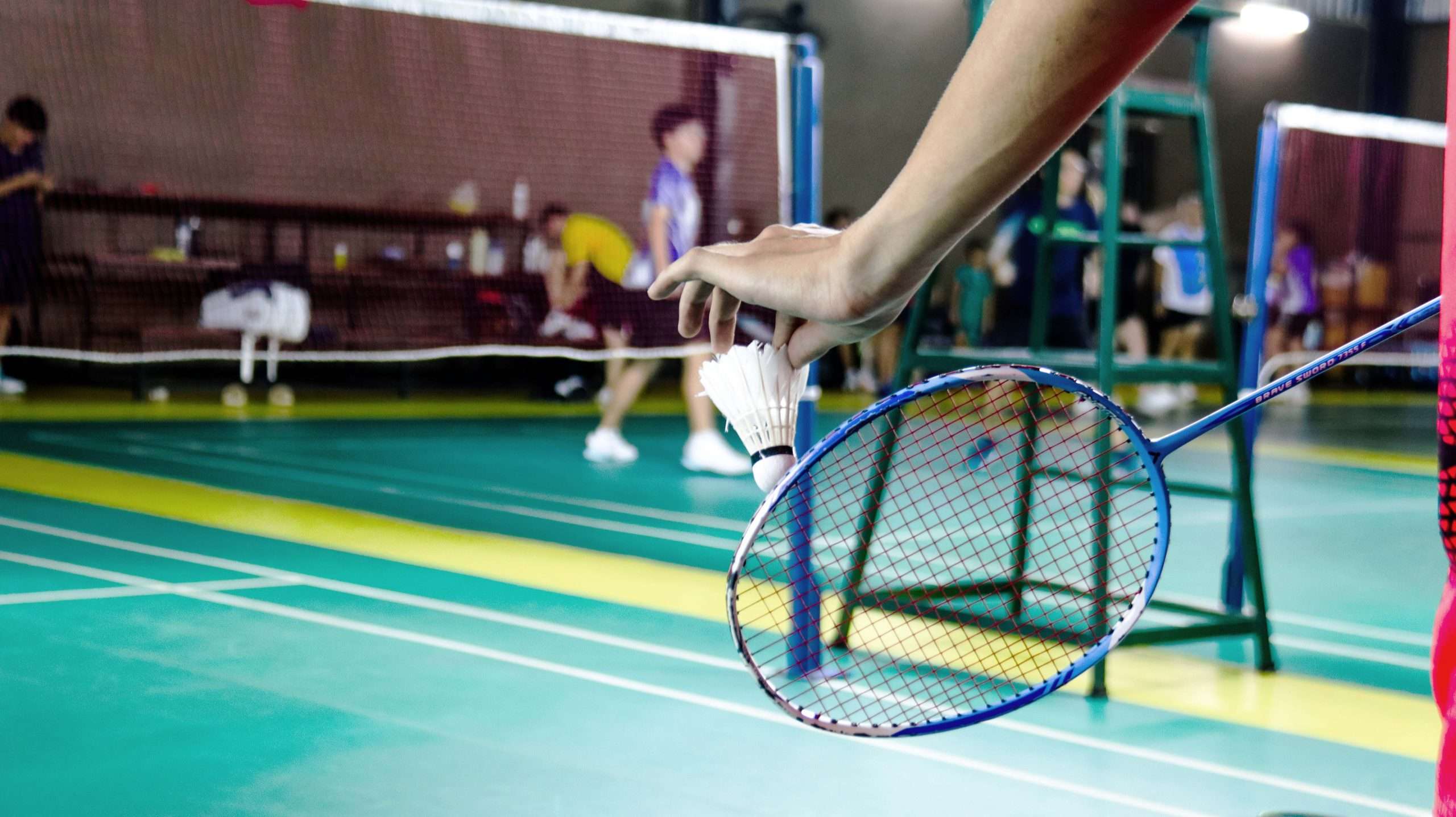
Students playing badminton during PE

Photo — Badminton rally

Badminton

A fast net sport with constant movement. Frequent quick starts and swings develop reaction speed and lower-body agility.

Discover Gr 2–3
Make contact

Learn the grip and bounce the shuttle in the air, finding the feel and the fun of making contact.

Foundation Gr 4
Core strokes

Learn clears, serves, and basic footwork; sustain simple rallies.

Refine Gr 5–6
Footwork & rallies

Refine court footwork, expand shot variety, sustain longer rallies.

Master Gr 6–8
Singles & doubles

Build speed and fitness, learn tactics, and compete in singles and doubles.

Develops: Legs & calves Shoulders & forearms Core Reaction

Tennis

Coming soon

Played across a larger court with constant running and rotational strokes, tennis builds whole-body coordination, rotational power, and sustained movement. Because it asks so much of coordination, it begins a little later.

Discover Gr 3–4
Racket & ball

Use shorter rackets and slower balls on small courts to build hand-eye coordination.

Foundation Gr 5
Ground strokes

Learn forehand, backhand, and serve basics, sustaining baseline rallies.

Refine Gr 6–7
Movement & rallies

Improve footwork and consistency, sustaining rallies with movement.

Master Gr 7–8
Tactics & matches

Develop spin and power, learn to read the rhythm of a match, and play competitive singles.

Develops: Lower body Rotational core Shoulders & arms Coordination

Squash

Squash center opening 2027

A high-intensity sport played in an enclosed court. Fast balls and relentless rallies push reaction, power, and cardiovascular fitness hard. This is a sport we will introduce in the next year or two, with a dedicated squash center expected to open in 2027.

Discover Gr 3–4
Court & ball

Understand how the ball rebounds in an enclosed court; practice hitting against the wall.

Foundation Gr 5
Core strokes

Master forehand, backhand, and serve, sustaining simple rallies.

Refine Gr 6–7
Placement & movement

Learn to control placement and court movement, with longer, more intense rallies.

Master Gr 7–8
Tactics & matches

Strengthen power and fitness, learn attacking and defensive strategy, and compete.

Develops: Lower body Core Shoulders & forearms Power & cardio

High School · Grades 9–12

From broad exposure to personal depth

In high school, the sports no longer move forward side by side. After the broad exposure of elementary and middle school, a student knows what they love and where they excel.

As the body nears maturity, we also introduce more systematic strength and conditioning under professional guidance, always following the same principles: correct form first, protection of the spine and joints, and steady progression. We want a student to leave us with the skills of a sport and, above all, with a way of understanding their own body and taking care of it for the rest of their lives.

The talented competitor

We connect them with higher-intensity specialized training and competition against other schools, refining fitness, technique, and mindset to help them progress toward varsity-level play and beyond.

The lifelong lover of the game

We help them refine a sport into a pastime for life: dependable technique, healthy training habits, and the lasting ability to find joy and release in movement.

The one still searching

We do not rush. We give them room to try different sports and, with a teacher's observation and guidance, gradually find the one that lights them up and keeps them coming back.

Our Promise

What your child takes away
lasts a lifetime

Long after these years have passed, when the child is grown, their body will still carry what we taught them: the right way to breathe and move, an easy and open posture, and a love of movement. To learn more, explore the programs below.

This page is based on general patterns of child and adolescent development and on public guidance from organizations such as the WHO and CDC. The grades indicated for each stage are a general guide; actual teaching is arranged around each child's individual development.