
Elementary Learning Blocks

Learning blocks are the heart of the elementary day. They are the protected stretches of time when children read, write, count, investigate, and make sense of the world. Every block is designed with intent, to give a child the knowledge, thinking habits, and character they will draw on for the rest of their life.

What The Learning Blocks Cover

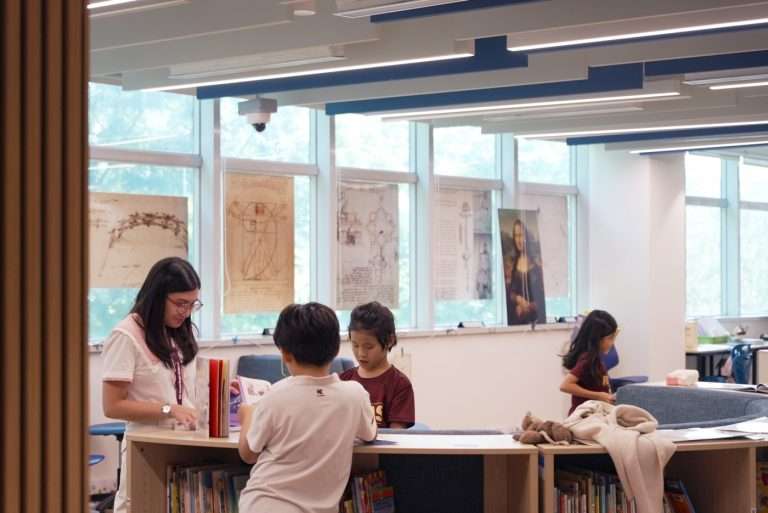
Elementary reading corner for language arts at RDAS 01
Reading corner

Language Arts

In the early grades, children learn the code of written English through explicit, systematic phonics and spelling. From there they read closely, using comprehension strategies like inference, and learning to tell fact from opinion. They write for real purposes and readers, from stories to reports to arguments, planning, drafting, and revising, and they learn to speak, present, and listen well in discussion, with spelling, punctuation, and grammar taught throughout.

Why it matters: Children learn to take an argument apart, weigh competing views, and question what they read. That is what makes language arts the ground every other subject stands on.
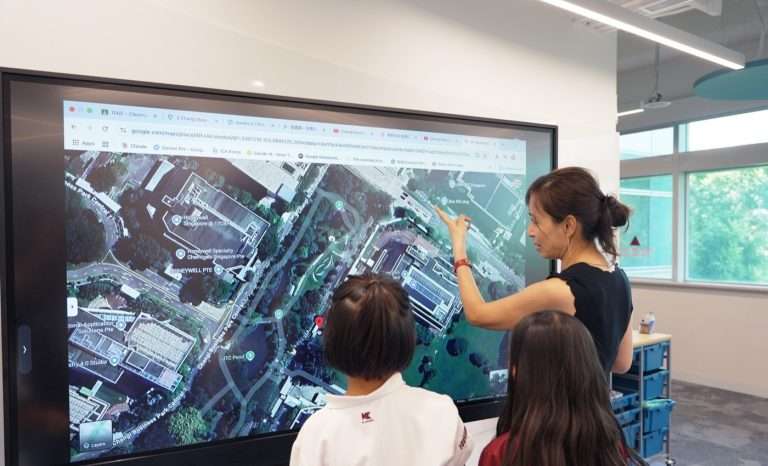
Elementary students working with maps in social studies 02
Maps & timelines

Social Studies

In geography, children learn to make and read maps with symbols and a legend, collect and interpret data, and understand weather, changing landscapes, and how people and their environments shape each other. In history, they work as young historians, asking questions and weighing sources, ordering events chronologically, and tracing the causes and effects that drive change across past societies and their own lives.

The long view: a child who knows how people, places, and time connect grows into someone who understands the world and their place in it.
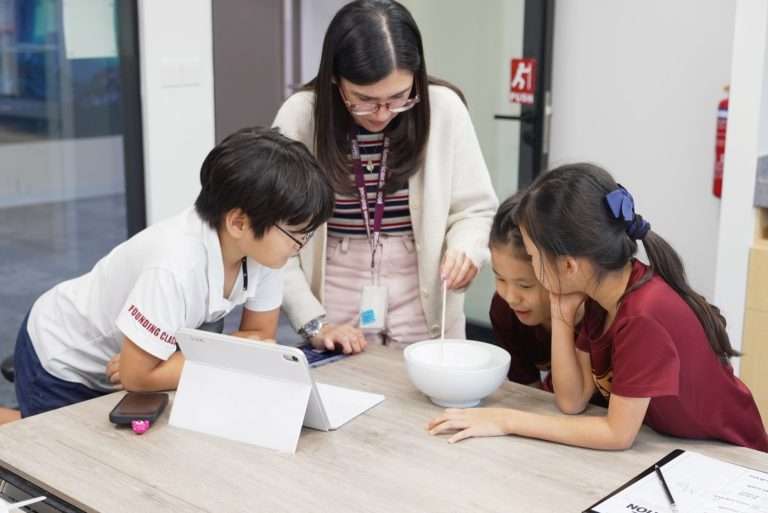
Elementary science lesson in the lab at RDAS 03
In the lab

Science

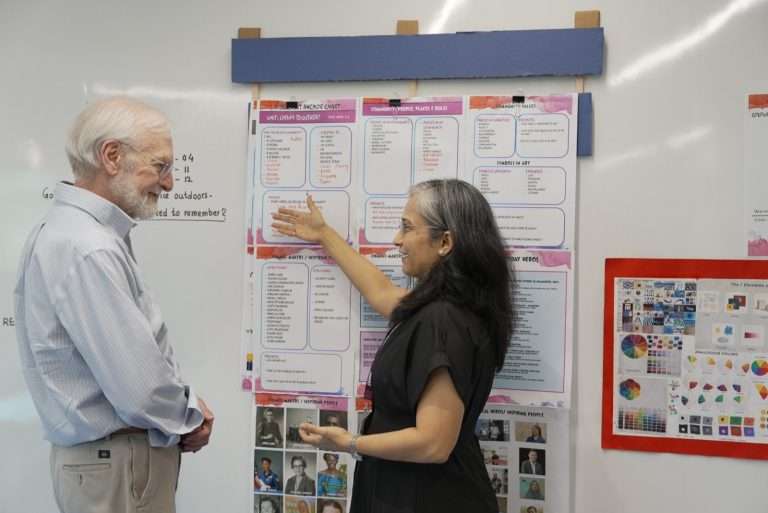
Children learn science through inquiry. They ask scientific questions, plan controlled investigations that change one thing at a time, make predictions, observe and measure carefully, look for patterns, and draw conclusions from what they find. Across the years they study the living world in biology, materials and their changes in chemistry, and forces, energy, earth, and space in physics.

What it grows: curiosity meets method, so a child learns to test an idea against evidence and to trust what the evidence shows.

Elementary students learning mathematics hands-on 04
Math in action

Mathematics

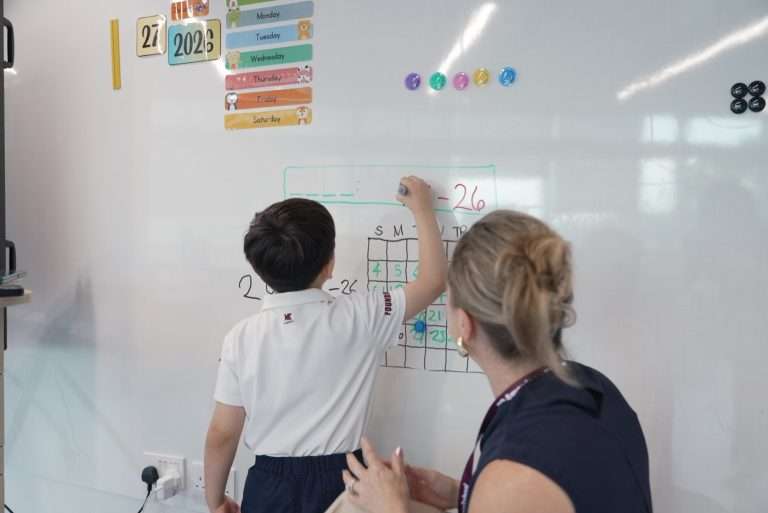
Children build number sense first, from place value and number facts to written and mental strategies for addition, subtraction, multiplication, and division. They work with fractions, decimals, and percentages, meet early algebra through patterns and rules, and study geometry, measurement, and data analysis. At every step they move from concrete materials to pictures to symbols, and they explain and defend their reasoning out loud.

What it builds: a child who can explain why an answer works carries real mathematical thinking into the years ahead.

Teaching by the Science of Learning

How we teach matters as much as what we teach. Every RDAS teacher is trained in cognitive science, and teaches in step with how memory and attention actually work. A few principles run through every learning block.

01

We Teach For Lasting Memory

Children practice bringing knowledge back to mind, closing the book to explain it in their own words and quizzing themselves. This is retrieval practice, and pulling something back out is what locks it into long-term memory.

02

We Come Back, And Come Back Again

Important ideas return across days and weeks, deliberately spaced. This spaced practice lets them settle in and stay, long after the lesson is over.
03

High Challenge, High Support

We assign work a step beyond what they can already do. Then we stay close as they work at it, watching for frustration and giving support the moment it helps.
04

Feedback While It Counts

Children hear what is working and what to fix while the work is still fresh, so a small misstep gets corrected before it settles into a habit.

Every Child, Fully Seen

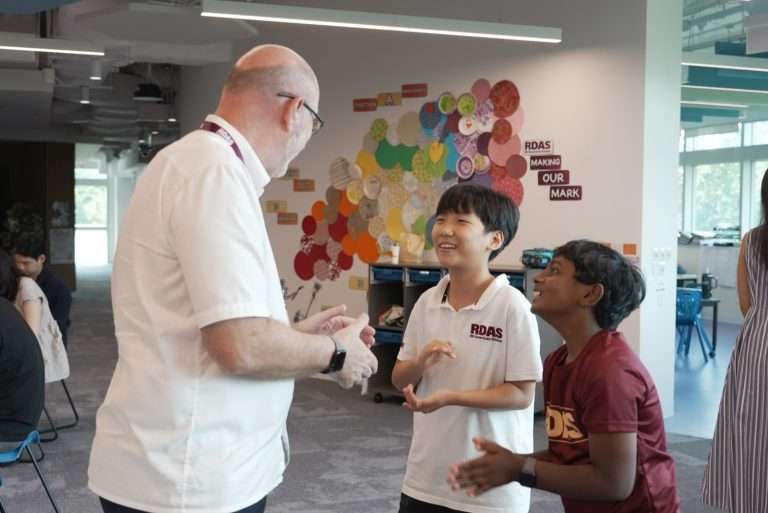
Here, teachers know every child closely, reading the small signals every day: a quicker answer, a puzzled pause, an idea clicking into place. They always know exactly where each child stands.

Frequent Check-Ins

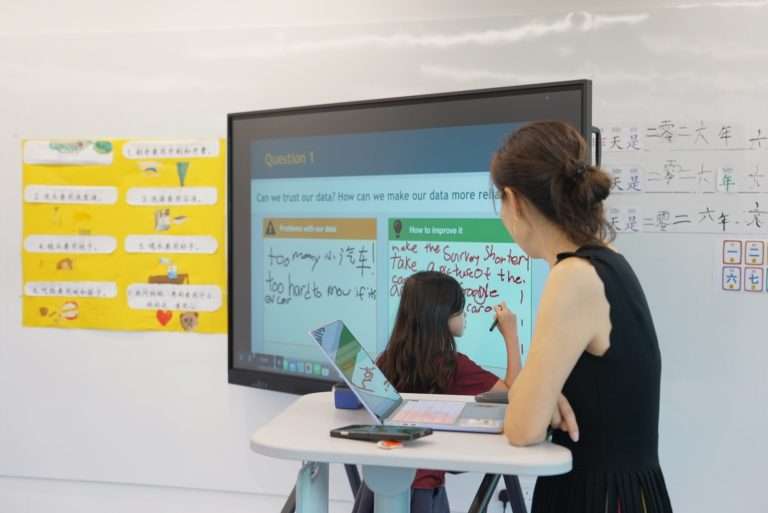
This is formative assessment in daily practice. Short daily checks — a quick question, an exit ticket, a glance at a child’s work — let us catch these signals on the day they appear, so we always know what has been understood and what needs teaching again.

Teacher running a quick formative check-in with students

We Find Where It Is Stuck

Our teachers look past “not trying hard enough” to the real cause: a sound not yet decoded, a step skipped, an idea half-built. They work on exactly that.

Teacher helping a child find where learning is stuck

Flexible Small Groups

This is differentiated instruction: groups flex to match what a child needs now, and a lesson gets retaught right there, all within the same week. A child might race ahead in reading while needing support in fractions, and the groups move with them, so the right help arrives when it makes the most difference.

Flexible small-group instruction in an elementary classroom

Children Who Watch Their Own Thinking

Over time, children build metacognition, learning to check their own understanding, to ask “do I really get this?” and to notice where they are stuck. A child who can see their own learning is a child who can steer it.

Elementary student reflecting on their own thinking

See A Single Subject Up Close

The blocks are the academic core of the day, and three more subjects round out every child’s week. Each one has a full curriculum of its own and its own place in the week. Take a closer look at any of them.