


Dynamic
Learning Spaces

We did not begin by asking what facilities a school should have. We began by asking what experiences shape a child's learning and how spaces can help foster them.

Experiences that teach them to think, communicate, collaborate, create, reflect, and adapt.

The spaces that follow were designed to help our teachers curate activities that promote these essential skills.

The Environment Is the Third Teacher

A child’s first teacher is the family. The second is the educator. At RD American School, we believe the environment is the third.

That is why our campus was not designed simply around classrooms and facilities. Every space is considered around how children think, communicate, collaborate, reflect and adapt.

From acoustics that allow multiple groups to learn comfortably in shared spaces, to living greenery, natural light and flexible environments that change with the learning, the campus actively shapes the experiences students have every day.

Designed by award-winning education architect Trung Le , these are not spaces students visit occasionally. They are learning spaces used repeatedly until the behaviors they encourage become habits.
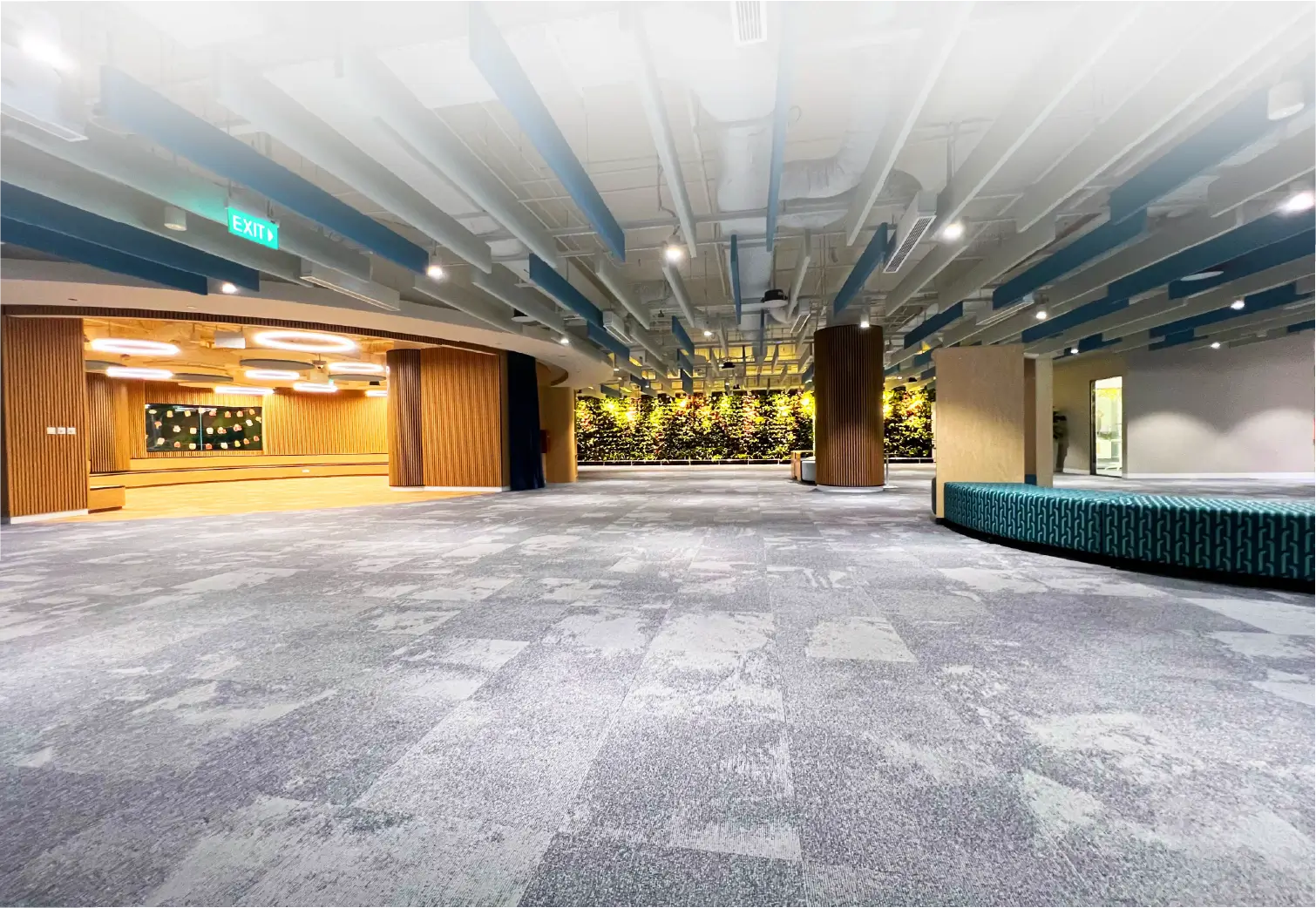
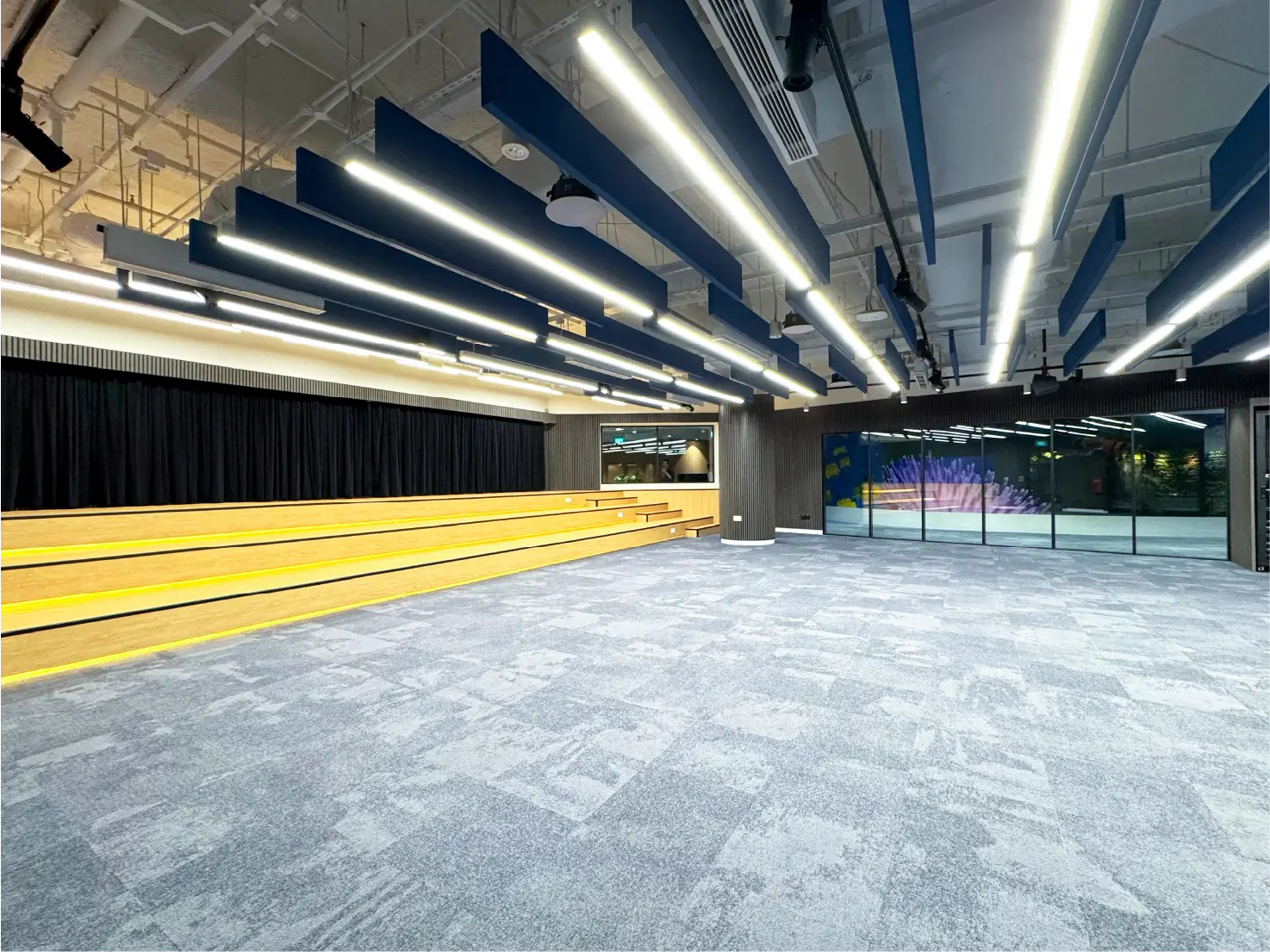
Students gathered on the wide tiered steps of the Community Plaza at the center of the school

The Heart of Community

Community Plaza

Learning does not only happen inside a classroom.

The Community Plaza is designed for students to meet, work, exchange ideas and learn alongside one another throughout the day. Multiple groups may be collaborating here at the same time, which is why even the acoustics have been deliberately considered — from the suspended sound-absorbing panels to carpeted flooring and acoustic panels.

The living greenery is intentional too. Drawing on research into the relationship between nature, attention and wellbeing, the environment creates moments of calm within an active school day.

It is a shared space where community and learning happen together, not a corridor between classrooms.

Nearby, the Parent Café extends the same philosophy to families, creating a place for parents to connect after drop-off, chat with a teacher, and build a sense of community.
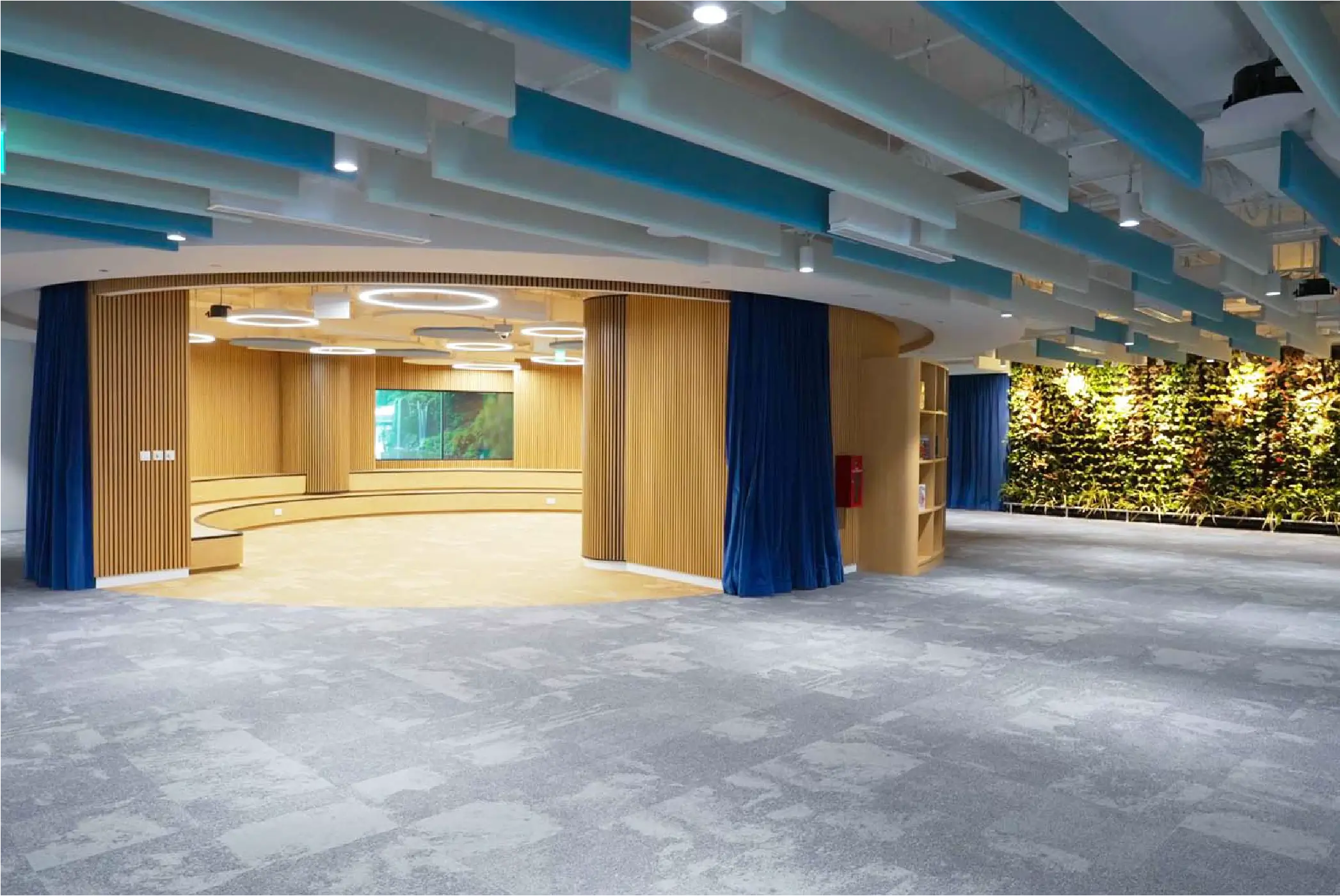
The Cognition Circle, a round carpeted gathering area ringed with low seating

Finding Your Voice

Cognition Circle

Step into the center of the Cognition Circle and something changes: you hear your own voice differently.

The circular environment is designed so students can see and respond to one another. There is no front or back row.

Students learn to speak to an audience, listen actively, read body language, respond to different viewpoints, and become increasingly comfortable having attention focused on them.

For a young child, those repeated experiences matter. Confidence is not something we simply ask students to have.

It develops through hundreds of opportunities to find their voice, use it and discover that it deserves to be heard.

The Black Box, a flexible dark-walled theater space set up for a student presentation

Presenting with Purpose

Black Box

Standing in front of an audience feels very different from answering a question from your seat.

The Black Box gives students regular opportunities to present, perform, explain and defend their ideas in front of other people.

They learn how to organize a message, hold an audience, respond to feedback and communicate with increasing clarity and confidence.

The flexible environment can also transform for drama, movement, physical activity and collaborative learning.

Because confident communication is not developed through one presentation. It is developed through repeated practice.

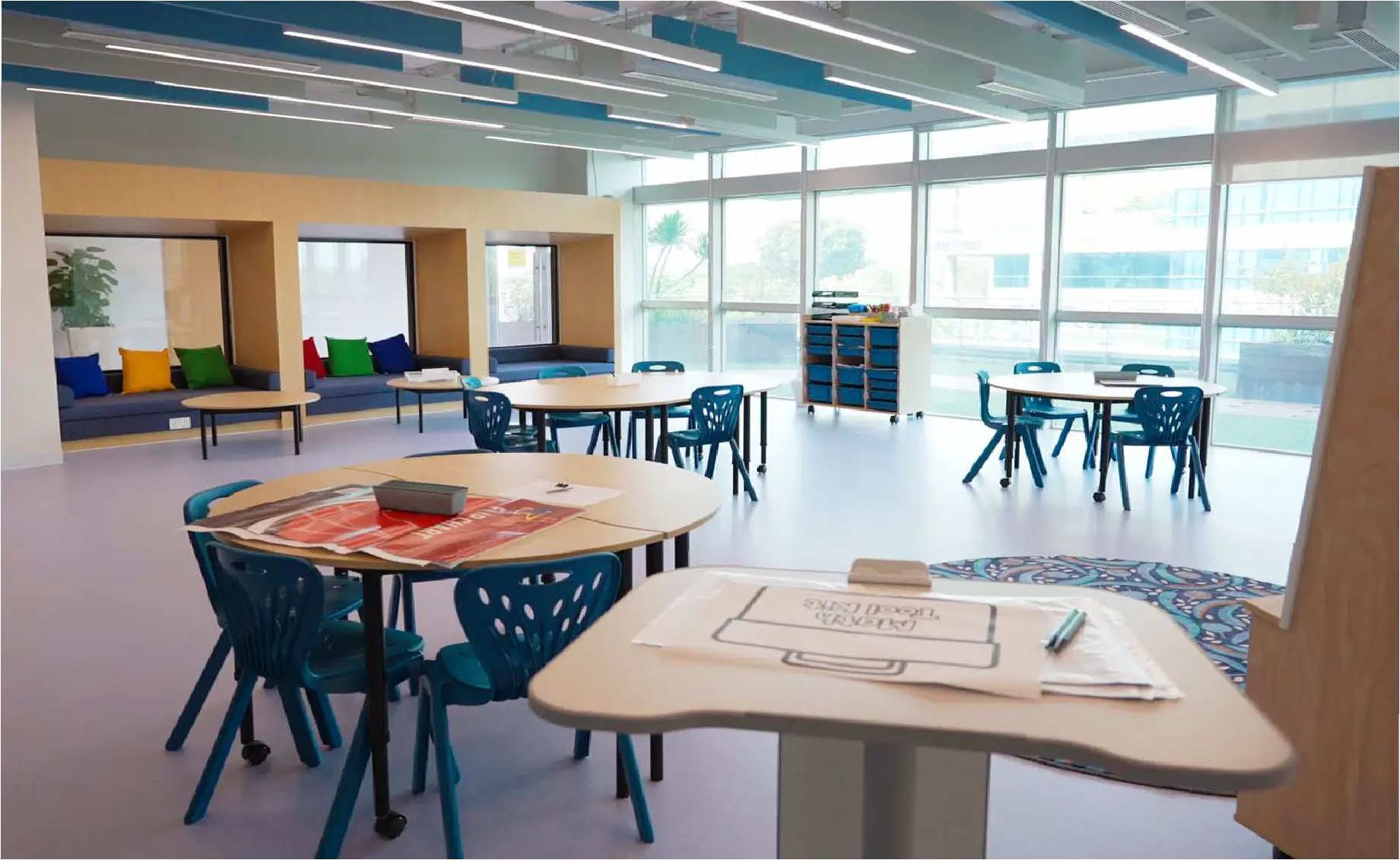
A Learning Studio arranged for small-group work, with movable tables and a teaching wall

A Familiar Base for Flexible Learning

Learning Studios

For younger students, familiarity matters. The Learning Studio provides a grounded home base while still allowing learning to change throughout the day.

When introducing a new concept, students may receive direct instruction from the teacher at the whiteboard or portable touchscreen. Later, a teacher may sit with a small group while other students collaborate or do independent practice.

Adjustable furniture and ergonomic seating allow the physical environment to adapt as learning needs change.

Rather than expecting every child to learn in exactly the same way, we have designed and furnished the environments to give teachers more opportunities to meet students where they are.

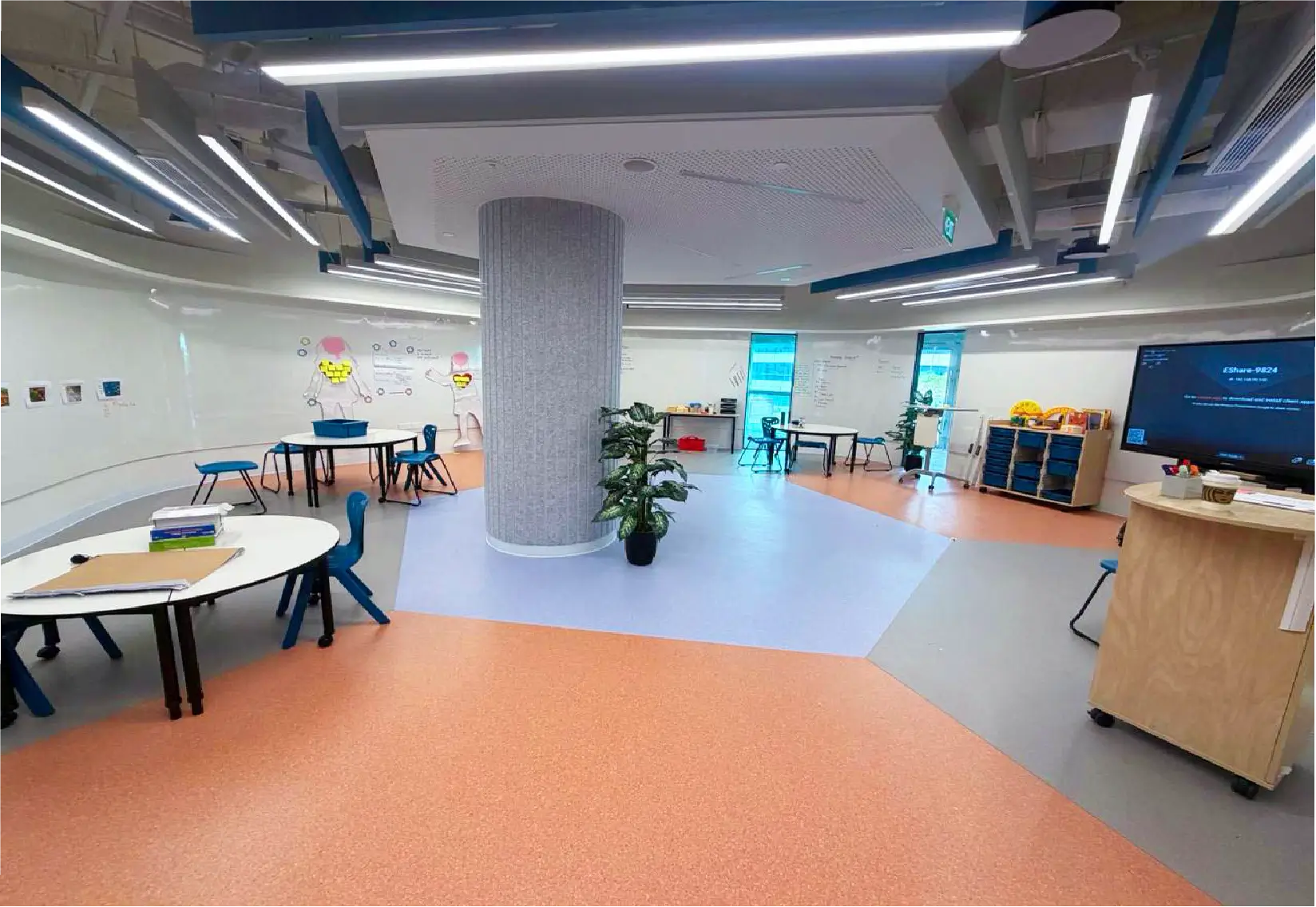
The Visual Thinking Lab, a bright studio with writable walls and shared work tables

Where Ideas Take Shape

Visual Thinking Lab

What happens when thinking no longer has to fit on a piece of paper?

In the Visual Thinking Lab, students can externalize their ideas across expansive writable surfaces — drawing connections, reorganizing thoughts, questioning assumptions and changing their minds as their understanding develops.

The space draws on approaches such as Harvard Project Zero’s Visible Thinking, including routines that encourage students to See, Think and Wonder.

Making thinking visible also gives teachers something invaluable: insight into how a child is arriving at an answer, not simply whether the answer is correct.

Students can also see how their classmates think, compare perspectives and build upon one another’s reasoning.

At RDAS, we are interested not only in what students know, but in how they think.

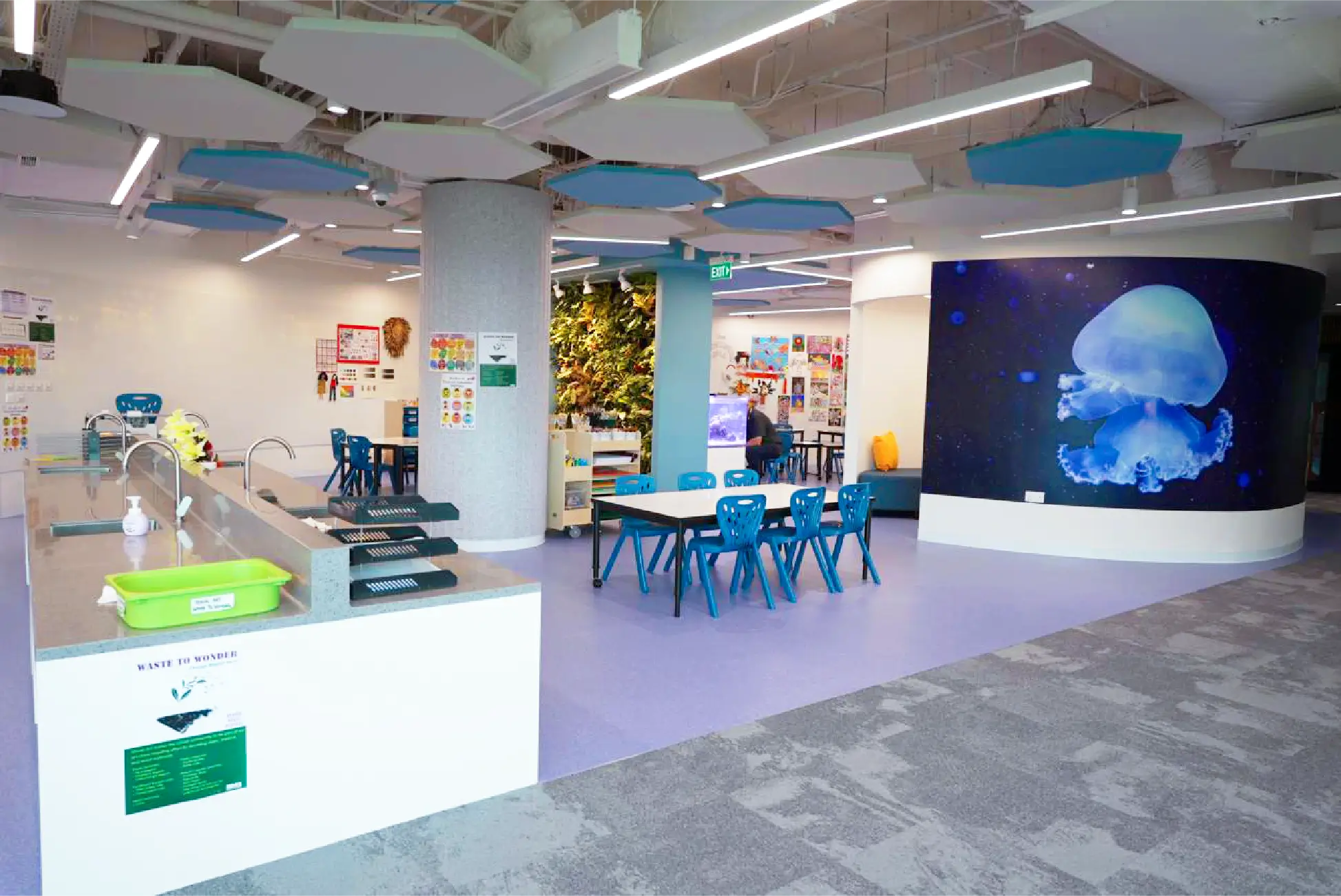
The Collider, a spiraling open work area with tiered seating and quiet nooks

From Ideas to Impact

The Collider

Ideas rarely develop in a straight line.

A student may begin independently, test an idea with one or two classmates, bring it into a larger group, rethink it after discussion and eventually turn it into something new.

The Collider is designed around that natural movement of learning.

Its changing scale creates spaces for individual thought, small-group discussion and larger collaboration, allowing students and teachers to move fluidly between different ways of working.

The freshwater and saltwater environments within the Collider create further opportunities for spontaneous inquiry — students observe, ask questions, share what they know and often begin learning before a teacher has even asked them to.

When the environment provokes curiosity, students begin pulling knowledge towards themselves.

The Story Lab, a colorful reading and making room with interactive writable walls

Creativity Meets Literacy

Story Lab

Before children become powerful writers, they first learn how stories work.

In the Story Lab, students may read a story, listen to one, map how it unfolds, act it out, explore why a character made a particular decision or create an entirely different ending.

By experiencing stories from different perspectives, students deepen comprehension while learning how ideas, emotions and meaning are communicated.

Literacy is not simply learning to read words. It is learning to understand meaning — and eventually create meaning for someone else.

A Reflection Cave, a softly lit alcove with cushions for quiet time alone

Learning to Pause

Reflection Cave

Not every part of learning needs to be active.

The Reflection Caves give students spaces to pause, recognize what they are feeling, think through a challenge or simply reset before returning to learning.

Over time, reflection helps children build self-awareness — recognizing what affects them, what helps them regain focus and how they can respond more deliberately.

Our goal is not for an adult to regulate every experience for a child. It is for children to gradually learn how to understand and regulate themselves.

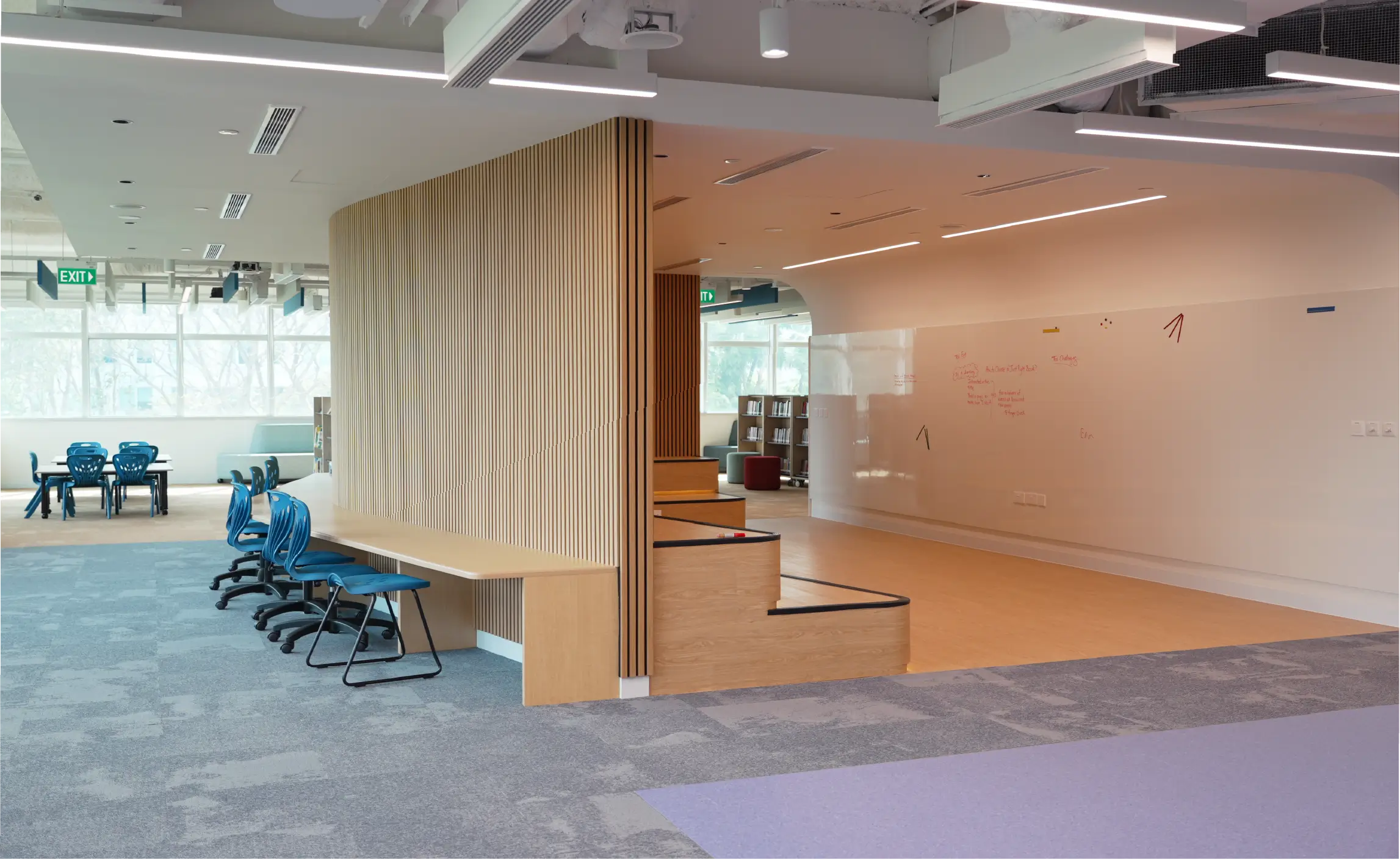
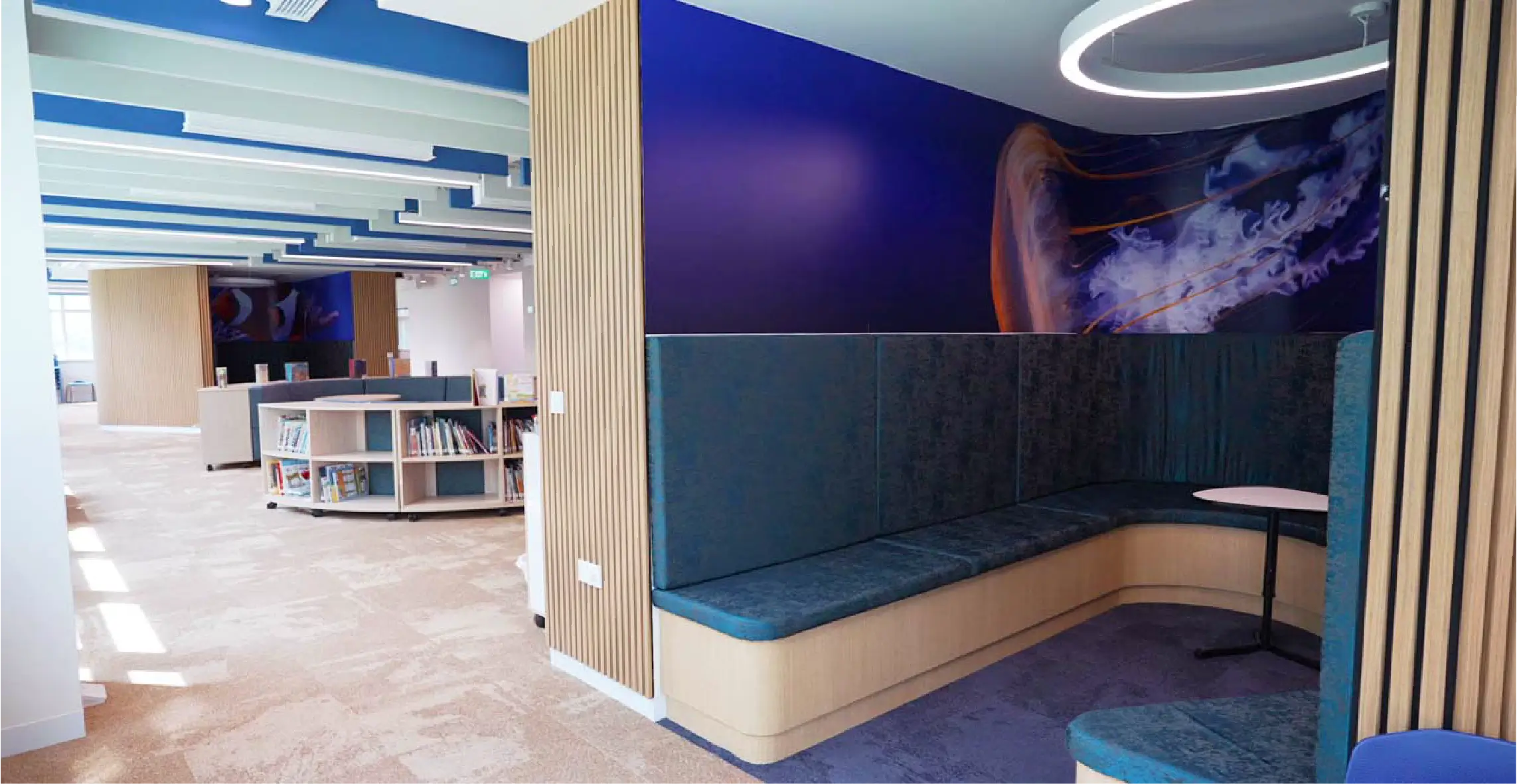
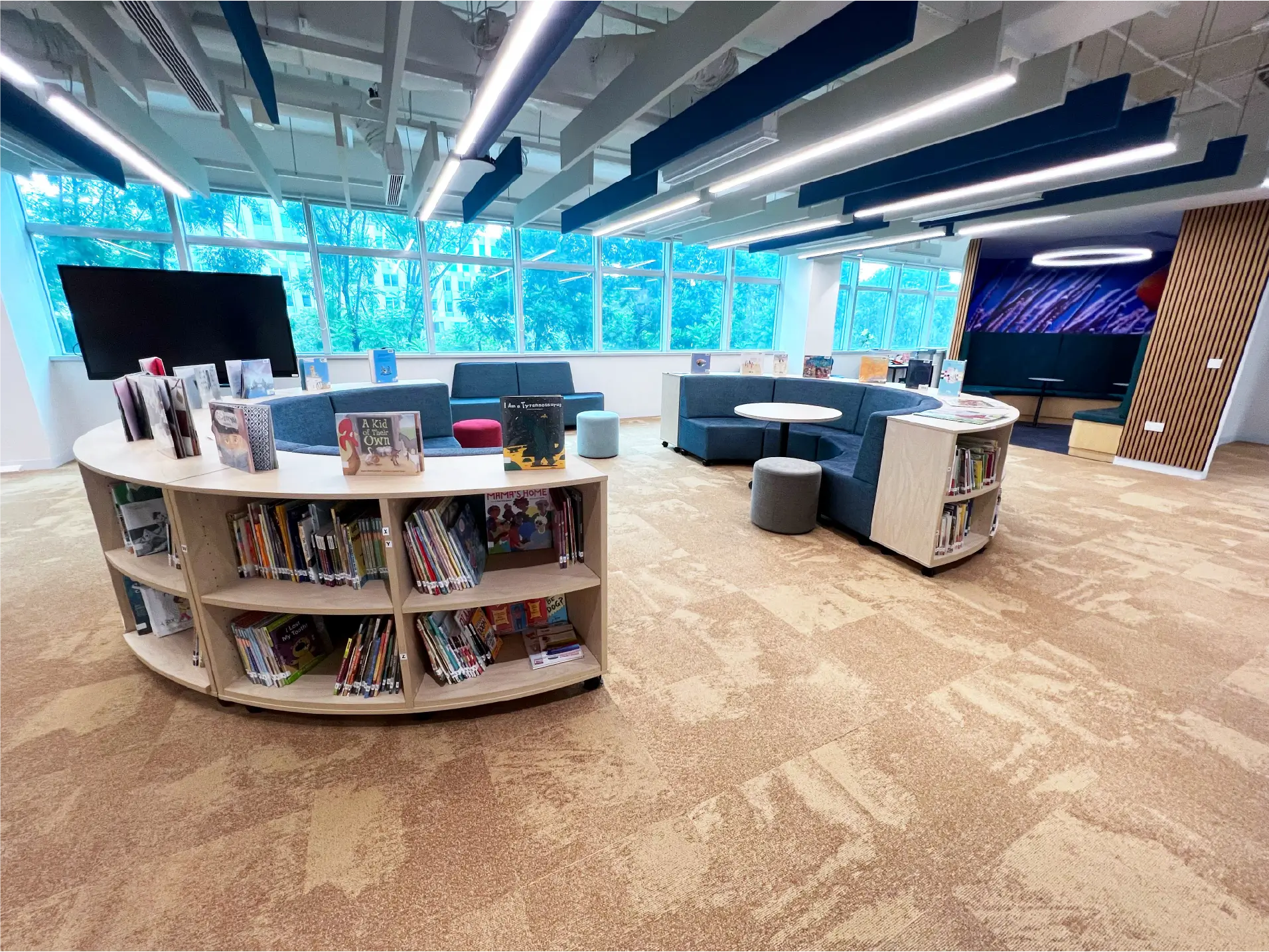
The Learning Commons, an open library hub with shelving, soft seating and study tables

The Library, Reimagined

Learning Commons

At RDAS, the library is not somewhere students disappear into once a week during a designated library period.

The Learning Commons sits directly within the everyday flow of school life — giving students ready access to books, digital resources, research, collaboration and quiet thinking whenever learning takes them there.

Natural light and varied seating create different environments for reading, researching, discussing and working independently.

The idea is simple: when curiosity appears, access to learning should be close behind.

About Our Learning Spaces

Commonly Asked Questions

About Learning Spaces Where are the traditional classrooms? How do children learn without defined classroom spaces?

Every space you see is a classroom, simply a more intentional one. We have designed distinct zones for expression, collaboration, movement, and reflection, and teachers move through them with their students, choosing the setting that best fits what children are learning that day. The structure is still there, and it works in service of the learning.

Student Needs How do you accommodate children who learn better with traditional desk-and-chair setups?

Some children do their best thinking at a quiet desk, and we have exactly that too. Here, it becomes a choice they can make each day. When appropriate, Learning Studios and quiet corners give children who prefer a settled, focused setup a place that feels right. Teachers make sure every child knows where to go when they need to concentrate.

Student Needs My child has ADHD. Won’t all this movement and flexibility make it harder for them to focus?

For many children who find it hard to sit still, a single fixed seat is a challenge. Being able to move, choose a quieter zone, or switch tasks helps students settle their own attention. Our teachers know each child well and guide them toward the spaces where they focus best.

Safety & Logistics Won’t children lose their belongings without assigned desks and storage spaces?

Children still have their own dedicated storage, and every child knows where their things belong. As they move between spaces, they also learn to keep track of their belongings, a small daily habit that quietly builds responsibility and independence.

Transition & Adaptation Won’t my child be unprepared for the structured, test-based environments they’ll face later?

Rigor comes from clear expectations and deep thinking, both of which live in these spaces every day. Children here regularly present their work, meet deadlines, and take on demanding tasks while practicing independence, risk-taking, and reflection. When they later encounter formal, test-based settings, they bring something stronger than familiarity: genuine confidence in what they know and an understanding of how they learn best.

Transition & Adaptation What if we move and my child has to attend a conventional school? Will they struggle with the transition?

Children who learn here develop skills that transfer to any setting: focus, self-direction, and the ability to communicate what they know. Families who move on consistently tell us their children adapt quickly.

Educational Philosophy Are you preparing children for the real world, or creating unrealistic expectations about learning environments?

The real world rarely looks like rows of identical desks. It asks people to collaborate, to move between tasks, to think on their feet and communicate clearly. That is what these spaces rehearse every day.

See These Spaces in Use

Each of these spaces is in use throughout the school day, from morning lessons to after-school activities. The pages below show how learning takes shape inside them.