RDAS Middle School

Our Curriculum

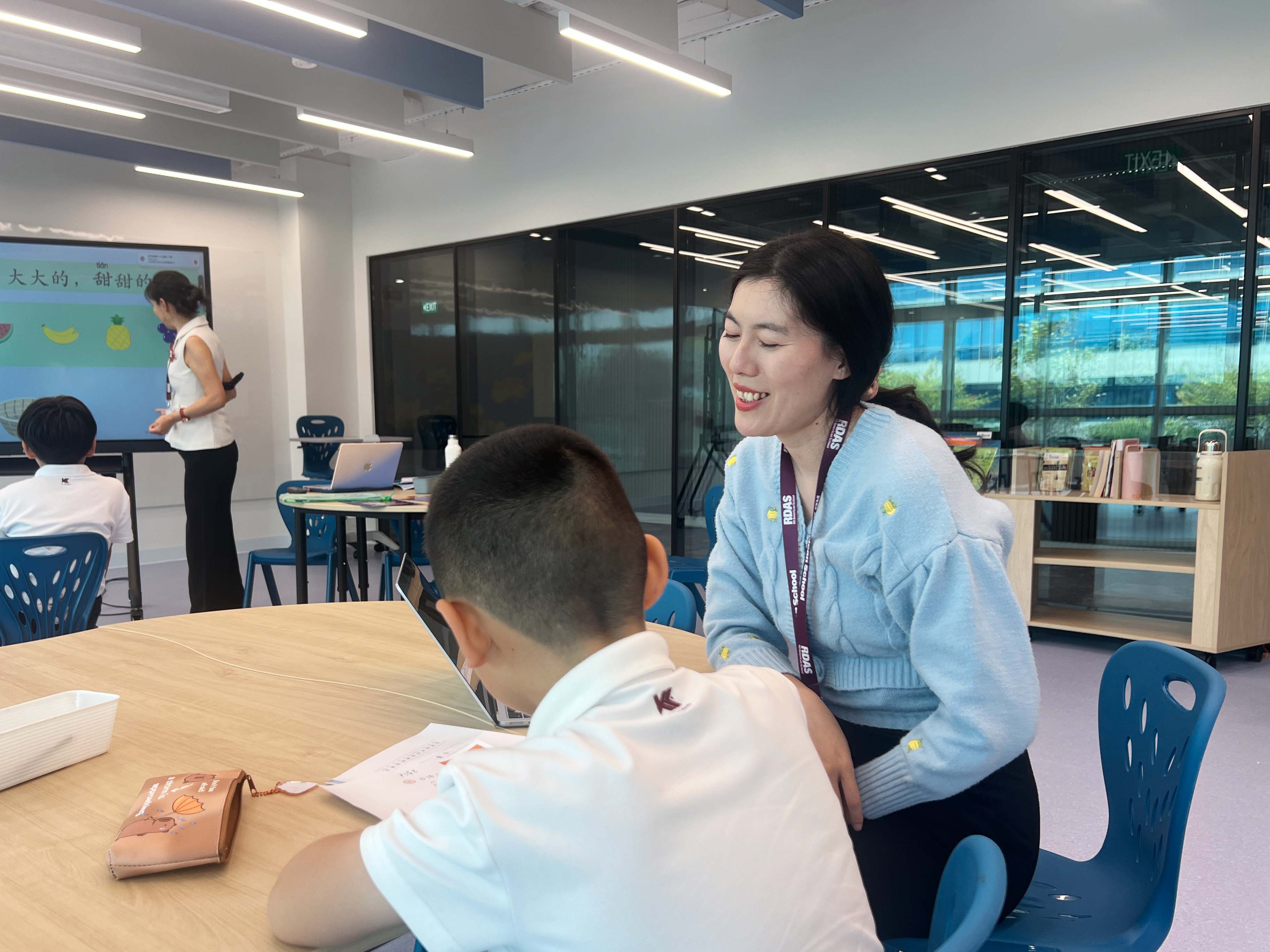
children learning our middle school curriculum
Limited Opening August 2026

Daily Schedule Overview

The RDAS Middle School day is designed to reflect several key principles: that focused academic work requires dedicated blocks of time that are not fragmented into brief periods; that transition between topics and spaces is itself cognitively costly and should be minimized; that both vigorous physical activity and structured reflection have important cognitive benefits and belong in the academic day, not at its margins; and that the period after the formal school day has ended is a valuable time for the kind of extended, student-directed engagement—in sports, arts, debate, clubs, and other co-curricular activities—that enriches the academic program.

The school day begins at 8:00 AM and concludes at 3:20 PM for standard academic activities, with co-curricular activities extending from 3:25 to 4:25 PM on Monday, Tuesday, and Thursday. The following table shows the typical weekly structure. Within each major time block, individual subjects alternate across the week to ensure appropriate time distribution.
Time
Monday
Tuesday
Wednesday
Thursday
Friday
8:00–8:20
Grounding
Grounding
Grounding
Grounding
Grounding
8:20–9:50
Social Studies / English
English (x2)
Social Studies (x2)
9:50–10:00
Break
Break
Break
Break
Break
10:00–11:45
Science / Math
Math / Design & Tech
Science / Science Lab
Math (x2)
Science / Science Lab
11:45–12:25
Lunch
Lunch
Lunch
Lunch
Lunch
12:25–1:15
World Language
Music / Art / Drama
Project
Music / Art / Drama
Math
1:20–2:10
PE
PE
PE
PE
PE
2:15–3:05
World Language
World Language
World Language
PE
World Language
3:05–3:20
Reflection
Reflection
Reflection
Reflection
Reflection
3:25–4:25
Co-Curricular
Co-Curricular
-
Co-Curricular
-

Grades 6–8 Middle School

The most important things we teach cannot be taught in a single lesson, mastered in a single unit, or assessed in a single test. They require time — repeated encounters across different contexts, over multiple years, with the kind of purposeful practice and honest feedback that gradually transforms a fragile first understanding into something durable, flexible, and genuinely owned by the student. This framework is built on that conviction.

The sixteen Enduring Understandings (EU) that follow are the school's Tier 1 throughlines — the transferable insights and capabilities that every student in Grades 1–5 will develop across all subjects, all teachers, and all years. They are not unit objectives or lesson targets. They are the ideas and habits of mind that spiral upward through the grades, returning in new contexts with new demands, deepening each time — so that by the time a student leaves this school, what they carry is not a collection of covered topics but a set of genuinely internalized ways of thinking, learning, and engaging with the world.

The framework is organized into three clusters: the D-Series (Habits and Dispositions), the L-Series (Core Literacies), and the C-Series (Core Disciplinary Ideas). Each EU is accompanied by five grade-level performance indicators describing what that understanding looks like in practice at each developmental stage — not as separate outcomes for separate grades, but as the same understanding rendered with increasing sophistication, complexity, and independence.

No unit is required to address all sixteen EUs simultaneously. Every significant unit of study should, however, connect explicitly to at least one EU from the D-Series and one from the L-Series or C-Series, and return to that connection in a visible closing move — a discussion, a reflective task, a transfer question. The content of a unit is the vehicle. The Enduring Understanding is the destination. And the journey, taken well, is what makes the difference.
The Advisory Program

The advisory program is among the most important structural features of the RDAS Middle School. In a school committed to knowing every student as an individual—to ensuring that no student falls through the cracks, that every young person has at least one adult who tracks their wellbeing and advocates for their success—the advisory relationship is the primary mechanism through which this commitment is honored in practice.

Advisory at RDAS is a program in which small groups of students (eight to ten per group) meet regularly with a dedicated faculty advisor. The advisor serves as a mentor, support, and advocate for their advisees: monitoring academic progress, watching for signs of social or emotional difficulty, checking in on the student's broader development as a learner and as a person, and maintaining regular communication with families. The advisor is typically the first adult within the school to whom a student or family turns when something is not going right.

It is important to understand what an advisor is not. The advisor is not a counselor or therapist, and does not take on clinical or diagnostic functions. When concerns arise that are beyond the scope of mentoring—significant emotional distress, learning difficulties requiring specialist assessment, family situations requiring professional support—the advisor's role is to identify the need and connect the student and family promptly to the appropriate resource. The school's guidance counselor and, where appropriate, specialist support staff are the next tier of support.

Sports

The RDAS sports program is being developed with an emphasis on sportsmanship, healthy competition, and the joy of movement and physical development. Students learn that the point of sport is not simply to win but to improve, to collaborate, to persist through difficulty, and to engage in the kind of healthy physical activity that research consistently links to cognitive and emotional wellbeing. As the school grows, we aim to develop a league-sport program that allows students to compete with and against other schools in Singapore and the broader region.

Physical Education is a daily feature of the school day, as described in Section Five. The sports program extends and deepens this commitment, offering opportunities for students to develop expertise in specific sports under the guidance of dedicated coaches. Students who have particular athletic interests or talents will find that the RDAS program is genuinely invested in their development, not merely in fielding teams for the purposes of appearance.